
Paza benchmarks and models target low resource speech recognition

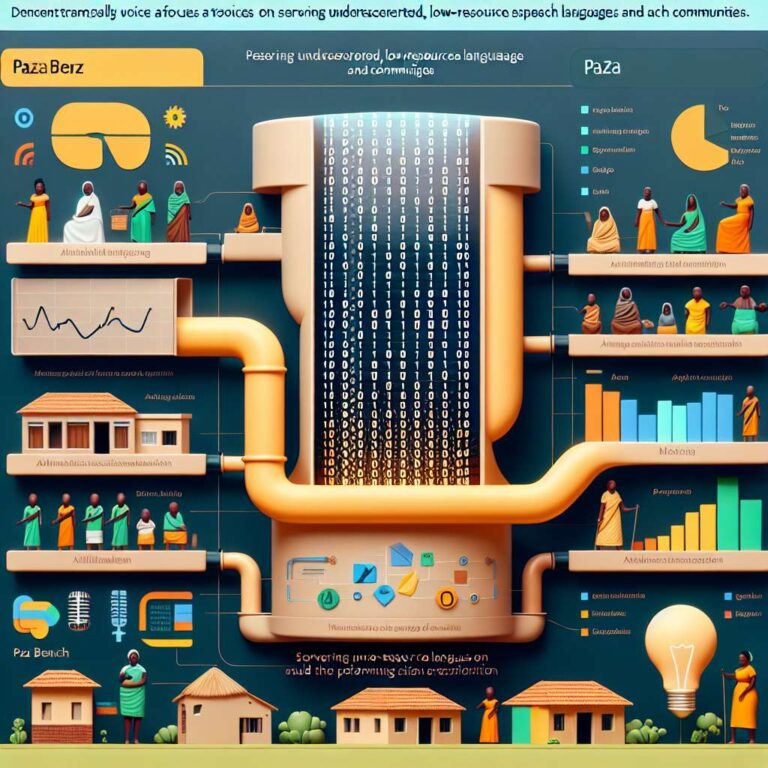
Microsoft Research has introduced Paza, a human-centered speech pipeline, alongside PazaBench, a leaderboard designed for low resource language speech recognition across African languages. The effort aims to benchmark and evaluate diverse models in real community settings.

Microsoft Research has introduced Paza as a human-centered speech pipeline focused on automatic speech recognition for low resource languages. Paza is designed to support speech technology development where data and tools are scarce, with an emphasis on practical usability and alignment with the needs of speakers and communities.

Alongside the pipeline, Microsoft Research is launching PazaBench, described as the first leaderboard dedicated to low-resource languages. PazaBench covers 39 African languages and 52 models and is tested with communities in real settings, providing a structured way to compare performance across a diverse set of languages and systems.

The combination of Paza and PazaBench is positioned to establish common benchmarks for low resource speech recognition and to encourage improvements in model quality for African languages. By grounding evaluations in real-world community testing, the initiative aims to make speech technologies more reliable and inclusive for underrepresented language groups.
58

Impact Score

YouTube to automatically label Artificial Intelligence-generated videos

YouTube is shifting from voluntary disclosure to automated detection for significant photorealistic Artificial Intelligence-generated video content. Labels will become more visible across long-form videos and Shorts, with permanent markers for content made with YouTube tools or verified through provenance systems.

Axiom Math says its proofs reached peer reviewed journals

Axiom Math says proofs generated by its system have been accepted by several peer-reviewed journals, pairing machine-checkable formal proofs with human-authored papers. The development adds evidence that Artificial Intelligence tools are beginning to contribute to publishable mathematical research.

Google expands Gemini for Science

Google is rolling out Gemini for Science, a set of experimental tools aimed at compressing scientific work that would typically take months or years into days. The effort combines multi-agent research systems, computational discovery tools, literature analysis, and database-connected life science assistants.

Europe weighs technology sovereignty push amid internal debate

Europe is preparing a new policy push to reduce reliance on major technology platforms, but internal disagreements are shaping the scope and pace of the effort. The Artificial Intelligence Development Act is due to be unveiled on June 3 after repeated delays.

Contact Us

Got questions? Use the form to contact us.

Contact Form

Clicking next sends a verification code to your email. After verifying, you can enter your message.