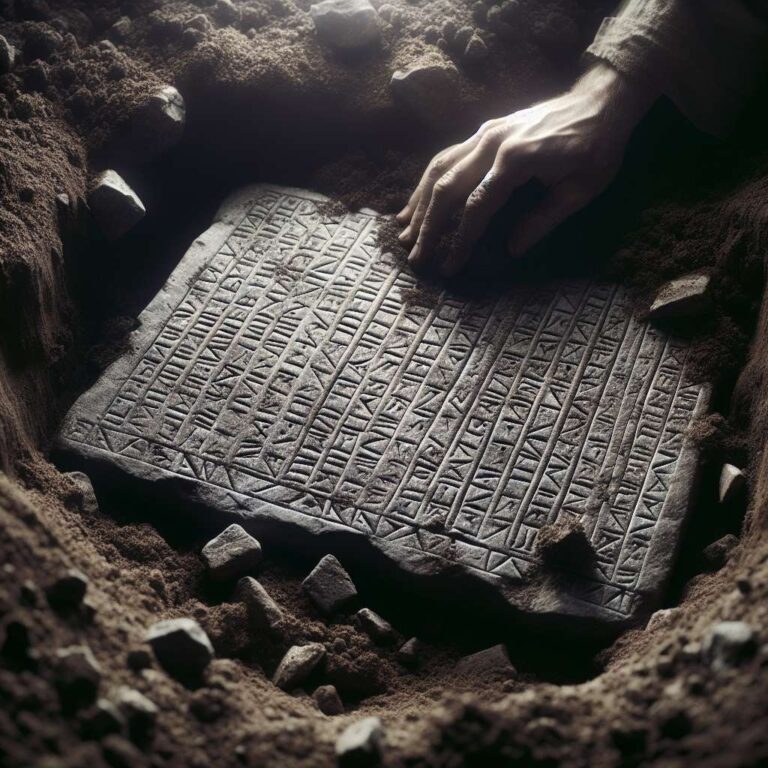
Google DeepMind has introduced Aeneas, a novel Artificial Intelligence software designed to assist historians in interpreting ancient Latin inscriptions. Building upon the foundation of Ithaca—DeepMind´s previous deep learning tool for unraveling Greek texts—Aeneas tackles the challenge of weathered Latin engravings by offering likely reconstructions, estimated dates, and origins for inscriptions found across the Roman world. The system cross-references partial transcriptions and scanned images of inscriptions against a database of nearly 150,000 cataloged texts, leveraging parallels from similar records to inform its predictions.
Aeneas´s deep neural network was trained on this extensive but ultimately finite dataset, a necessary adaptation in a field where the volume and quality of preserved inscriptions pale in comparison to the massive corpora fueling general-purpose language models like Google Gemini. By providing historians with plausible hypotheses for missing or damaged text, as well as suggesting comparable inscriptions, Aeneas accelerates research and reduces reliance on time-consuming manual cross-referencing. Independent testing with 23 historians showed that using Aeneas spurred research ideas for 90% of inscriptions and improved the accuracy of determining their origins. In landmark tests on the Monumentum Ancyranum—a renowned inscription in Ankara—the tool´s analysis closely mirrored expert assessments, earning praise from collaborating scholars for its detailed, historian-like approach.
Despite these promising outcomes, Aeneas currently stops short of speculating on the meanings of previously unknown texts, and its true utility for more obscure or degraded inscriptions remains to be determined. Critics like Harvard´s Kathleen Coleman note that further validation beyond well-known samples is needed to assess the tool´s long-term impact on academic workflows. DeepMind has responded by making Aeneas freely accessible as open source, aiming to support not only professional historians, but also educators, students, and museum professionals. Pilot programs are already underway to integrate the software into Belgian secondary history curricula, with the ultimate vision being real-time assistance for researchers and visitors at archaeological sites and museums alike.