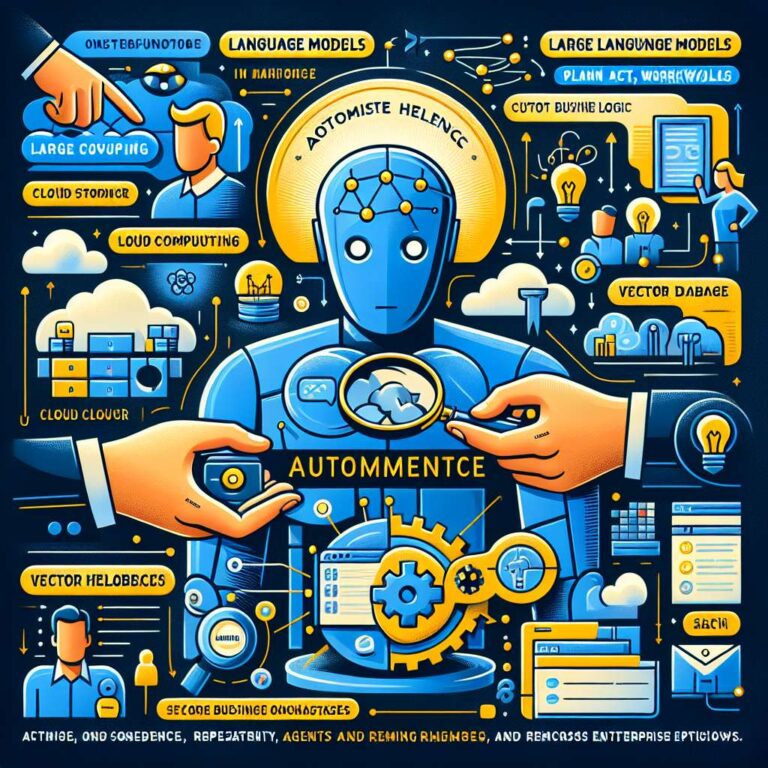
The article explores how Google Cloud’s agent development kit positions autonomous artificial intelligence agents as a progression from basic query-response systems to dynamic, goal-oriented entities. Annie Wang defines an agent as “essentially an LLM that can reason, act, and observe,” framing the shift from static language models to systems that can plan, take actions, and interpret feedback. In a recent Google Cloud {Dev}cember livestream with host Stephanie Wong at the #DEVcember event, Wang outlines how the kit supports this evolution by moving developers beyond simple large language model calls toward sophisticated, multi-step workflows that better align with mission-critical enterprise use cases where reliability and explainability are essential.
The agent development kit is described as more than a bundle of libraries, instead functioning as a structured framework for orchestrating complex agentic behavior. It addresses historic challenges where developers struggled to coordinate large language models across sequences of actions, manage tool usage, and maintain state over time. Central to an agent built with the kit is a well-crafted prompt that defines the agent’s objective and directs the large language model to call external “tools,” such as search functions, databases, or proprietary business logic. A demonstration highlights an agent that analyzes a CSV file, writes SQL queries to extract insights, and summarizes the results, showing how reasoning and tool integration can be combined into a coherent workflow tailored to real business tasks.
The framework emphasizes memory and evaluation as first-class concerns. Short-term memory is preserved within the model’s context window, while long-term memory can be backed by vector databases so agents can recall past interactions or prior information across extended engagements, such as ongoing customer support or lengthy analysis projects. Annie Wang stresses that the kit provides “a systematic way to measure the performance of your agents,” including defining test sets, running agents against those scenarios, and leveraging automated metrics alongside human review to surface failures and drive iterative improvements. Tight integration with Google Cloud’s Vertex Artificial Intelligence streamlines deployment by providing infrastructure to host agents, manage lifecycles, scale with demand, and monitor real-time performance. The article notes that this combination of structure, memory, evaluation, and deployment support allows sectors such as customer service, data analysis, and defense and intelligence to create specialized “little helpers” that convert abstract artificial intelligence capabilities into reliable, production-ready applications.