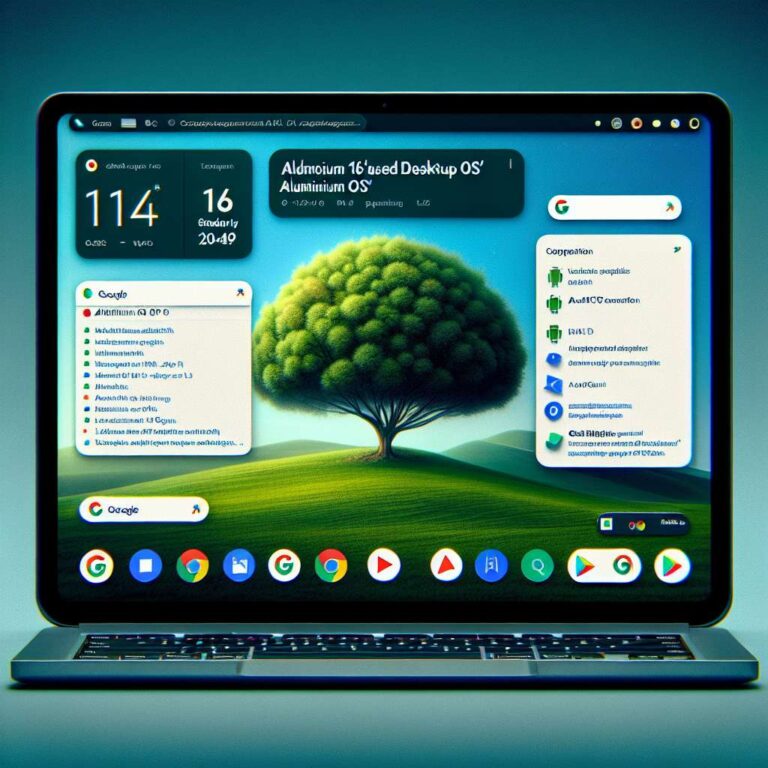
Google’s return to desktop computing appears to be underway after a leak revealed a new platform called aluminium os. The operating system surfaced when a Chrome Incognito bug report on the Google issue tracker included video from a machine running aluminium os, and before the clip was removed, 9to5Google captured screen recordings that showed an Android powered pc environment. The system is running on the latest Android 16 platform and is being tested internally on an HP Elite Dragonfly 13.5 Chromebook laptop equipped with 12th Generation Intel ‘Alder Lake-U’ Core processors, which signals a move from the mobile Arm based Android ecosystem to x86 architecture for this project.
The leaked interface shows a desktop layout that visually blends elements of macOS with aspects of the Gnome desktop environment commonly found in Linux distributions. There is a taskbar positioned at the bottom of the screen and centered in a manner similar to the default configuration in Windows 11, while system indicators such as battery status and Wi-Fi appear in the top right corner. A dedicated Gemini button is also visible, suggesting that access to Google’s Artificial Intelligence assistant is built directly into the core desktop experience rather than treated as an optional add on or separate app.
The project aligns with plans previously discussed by Qualcomm CEO Cristiano Amon and Google’s head of platforms and devices, Rick Osterloh, who in September 2025 at Qualcomm’s 10th annual Snapdragon Summit talked about a unified Android for pc initiative. Google intends to merge its ChromeOS and Android for pc development into a single branch that will produce an Android for pc version called aluminium os. According to the report, the new operating system will use Google’s advanced Artificial Intelligence technologies from Gemini on more powerful mobile designs running on the latest x86 architecture, and it is expected to leverage processors with capable NPUs so that Google’s open source Gemma models can run locally without any issues.