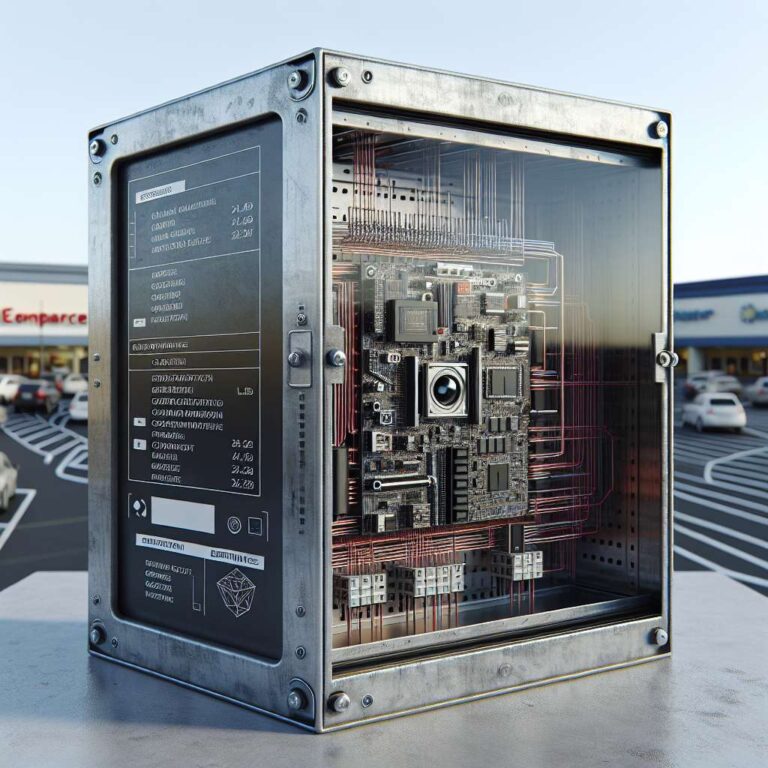
The era of cloud-only processing continues to give way to compute at the edge. GIGAIPC has introduced two 3.5´ industrial boards, ´QBiP-155UB´ and ´QBiP-125UB´, built around Intel core ultra 7 and core ultra 5 processors to meet that transition. The company highlights a 2.5-fold increase in power efficiency over previous generations, pitching these boards at deployments where energy budgets and sustained uptime matter most.
At the heart of both boards is Intel´s meteor lake-u architecture, which pairs general-purpose cores with a dedicated neural processing unit. GIGAIPC quotes up to 11 tera operations per second of neural throughput from that NPU while maintaining a base thermal design power of just 15 W. That combination of throughput and low power is designed to let systems run demanding Artificial Intelligence workloads continuously, reducing thermal throttling and preserving consistent inference latency across long operational windows.
The form factor and efficiency targets make the ´QBiP-155UB´ and ´QBiP-125UB´ well suited to power-constrained edge use cases. Examples called out by the vendor include smart parking systems that must monitor and respond in real time, precision medical devices that require reliable on-device analysis, and intelligent retail solutions that process sensor data locally to avoid round trips to the cloud. In each scenario the emphasis is on sustained on-device processing rather than bursty cloud offload.
Beyond raw performance figures, GIGAIPC frames these boards as tools for bringing intelligence closer to sensors and machines, where latency, connectivity and energy limitations shape design choices. They promise a path to lower operational costs and greater autonomy for embedded systems that need continuous Artificial Intelligence inference without constant cloud connectivity. For integrators and system designers focused on edge computing, these boards appear to prioritize predictable, long-duration performance over peak-only benchmarks.