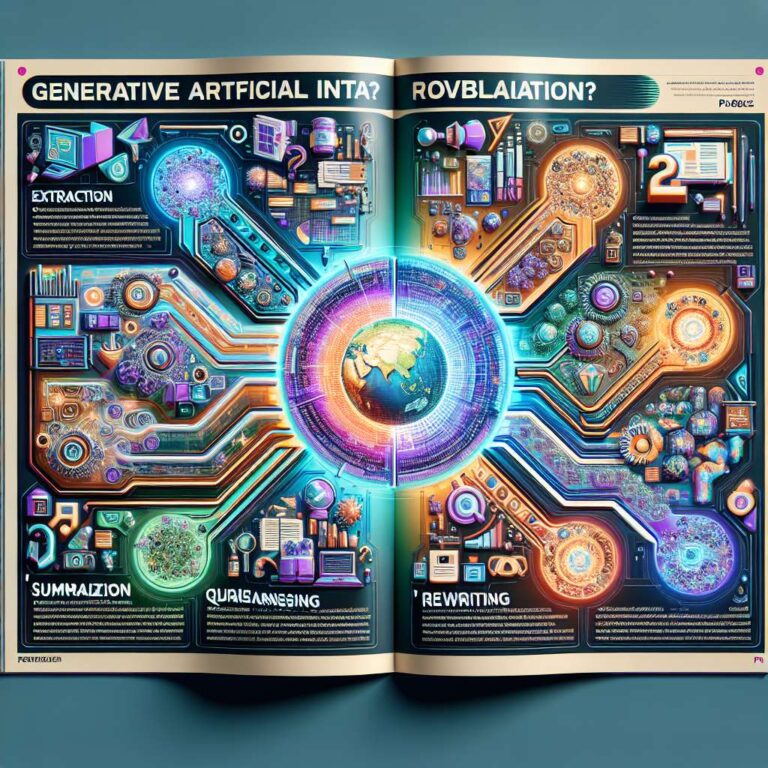
The article explores critical ways generative artificial intelligence is reshaping public relations in 2025, emphasizing seven core use case categories: extraction, classification, summarization, question answering, rewriting, synthesis, and generation. The author, Christopher S. Penn, draws from his keynote at Ukraine’s Tech PR School and ongoing support for Ukraine, illustrating how these techniques can be practically deployed by communicators and agencies in their daily operations. He underscores that any modern PR team not utilizing powerful deep research tools for extracting web and media data risks obsolescence.
Each use case is dissected with PR-specific examples. For extraction, Penn demonstrates capturing Google Business Reviews through vision language models like Google’s Gemini and using prompts to convert visual data into machine-readable JSON format. The classification stage involves sentiment analysis, emphasizing the need to use artificial intelligence for data augmentation rather than direct number crunching, relying on models to write code that processes data accurately. Summarization transforms extensive review datasets into actionable, client-ready insights and visual reports, focusing on priorities that matter to clients, such as customer sentiment and occupancy rates for hospitality businesses.
The article further explains how question answering with deep research agents facilitates targeted media outreach and effective campaign planning. Penn highlights the importance of tailored prompts and the CASINO framework to avoid wasting limited research quotas, promoting clarity of thought and strategic intent. In rewriting, generative artificial intelligence adapts generic pitches to the communication styles and interests of individual journalists or influencers, vastly increasing campaign efficacy. Synthesis merges review, market, and media data to develop nuanced PR strategies and customer profiles, moving beyond siloed datasets. The final step, generation, is regarded as the least effective when used without prior context but becomes transformative when grounded in rich, well-prepared data, enabling bespoke strategy creation and detailed tactical execution plans. Penn ultimately encourages readers to audit their PR teams and methodologies, warning that failure to embrace these artificial intelligence-powered workflows signals a need for change, while stressing that these advances remain accessible without deep technical expertise.