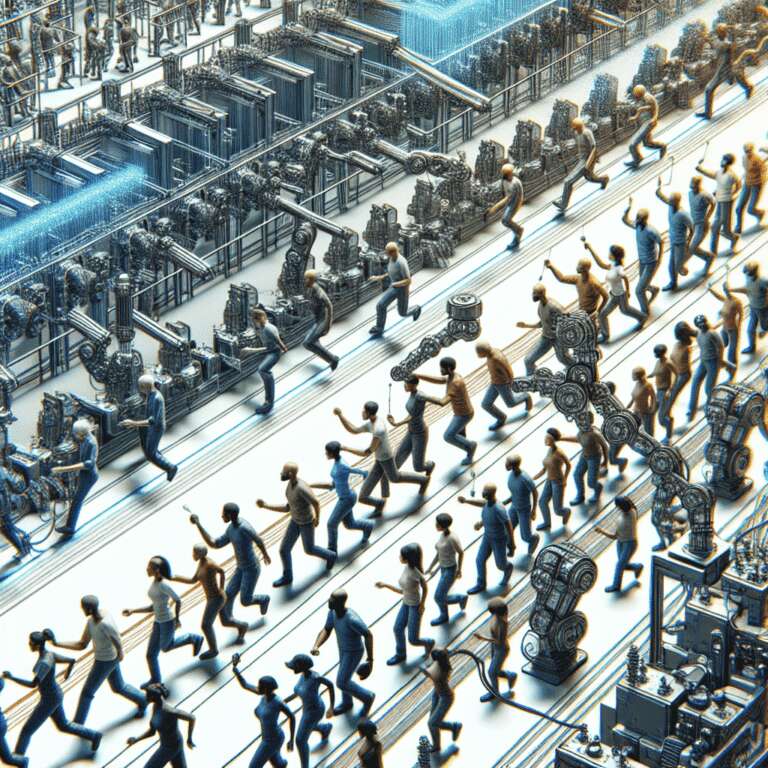
Businesses are rapidly adopting generative Artificial Intelligence solutions to create autonomous enterprises, fundamentally changing the landscape of business applications. Microsoft is at the forefront of this transformation, leveraging generative Artificial Intelligence to automate complex processes, orchestrate workflows, and provide intelligent decision-making across core business platforms. These innovations are enabling organizations to achieve greater efficiency by integrating artificial intelligence-driven agents and multi-agent orchestration into daily operations, allowing for a new era of application development and collaboration between humans and intelligent agents.
A recent example of this evolution is the new Aurora foundation model from Microsoft Research, which extends beyond its initial use in weather forecasting to deliver faster and more accurate environmental predictions. Aurora represents Microsoft’s focus on deploying large-scale, generalizable Artificial Intelligence models capable of addressing diverse real-world challenges, from climate science to supply chain optimization. By integrating such foundation models, companies are able to harness cutting-edge Artificial Intelligence capabilities within their business applications, creating opportunities for smarter forecasting, resource management, and risk assessment.
These advancements in Artificial Intelligence-powered automation are reshaping how businesses approach enterprise resource planning, customer relationship management, and sector-specific solutions such as healthcare and finance. Microsoft’s commitment to developing robust generative Artificial Intelligence tools highlights the ongoing trend of embedding advanced intelligence into the heart of organizational processes. As the autonomous enterprise becomes the new norm, leaders are required to rethink strategies for workforce engagement, data governance, and continuous innovation, ensuring that Artificial Intelligence acts as a strategic partner across the enterprise ecosystem.