
Future Automation in Manufacturing Confronts Challenges and Opportunities

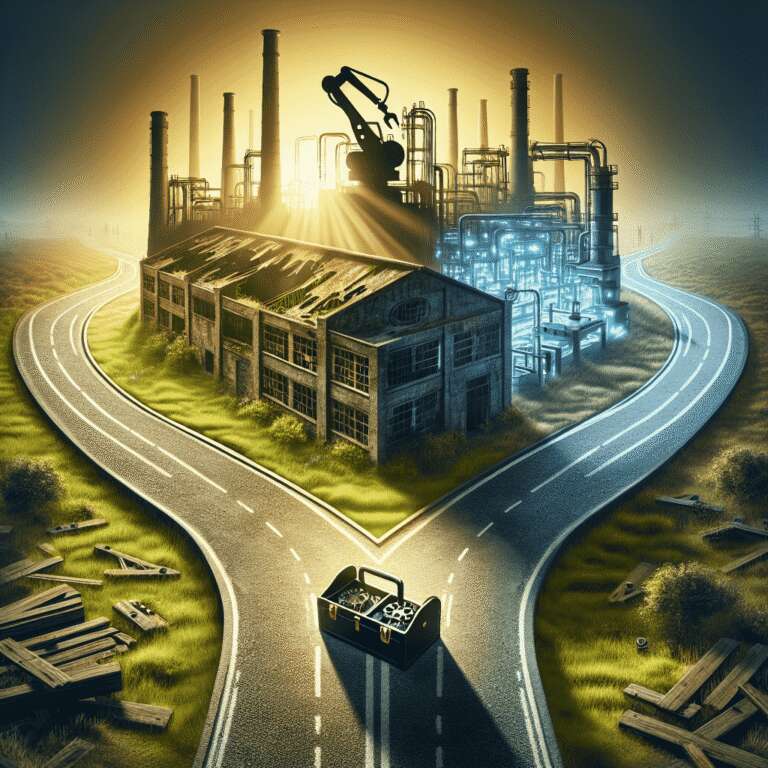
As manufacturing grapples with instability, automation technologies such as Artificial Intelligence and digital twins offer paths forward.

The manufacturing industry is currently facing significant challenges due to geopolitical instability affecting supply chains, rising costs, inflation, and a dwindling labor force with over 500,000 unfilled manufacturing positions in the U.S. alone. This is compounded by climate change and increasingly stringent environmental regulations, prompting companies to reconsider their operational strategies.

Advanced automation, through emerging technologies like industrial Artificial Intelligence, digital twins, IoT, and robotics, promises to deliver increased resilience, flexibility, and efficiency. These technologies have exhibited their potential in success stories: AI-driven maintenance can cut downtime by up to 50%, while digital twin simulations accelerate market time and reduce carbon emissions by an average of 15% according to business leaders.

However, widespread adoption of these technologies remains challenged by issues beyond technological capacity, including workforce skill gaps and financial investment risks, especially for small and medium-sized enterprises with older facilities. Governments have begun to promote industrial advancements by incentivizing high-tech manufacturing and localizing key production processes, aiming to mitigate dependence on global supply chains. These converging factors in technology and policy could facilitate a long-awaited shift toward advanced automation in the industry.
70

Impact Score

Google Vids opens free video generation to all Google users

Google has made Google Vids available to anyone with a Google account, adding free access to video generation with its latest models. The move expands Google’s end-to-end video workflow and increases pressure on rivals that charge for similar tools.

Court warns against chatbot legal advice in Heppner case

A federal court found that chats with a publicly available generative Artificial Intelligence tool were not protected by attorney-client privilege or the work-product doctrine. The ruling highlights litigation risks when executives or employees use chatbots for legal guidance without lawyer supervision.

Newsom orders California to weigh Artificial Intelligence harms in contract rules

Gov. Gavin Newsom has signed an executive order directing California agencies to account for potential Artificial Intelligence harms in state contracting while expanding approved use of generative tools across government. The move follows a dispute involving Anthropic and reflects a broader split between California and the Trump administration on Artificial Intelligence oversight.

Contact Us

Got questions? Use the form to contact us.

Contact Form

Clicking next sends a verification code to your email. After verifying, you can enter your message.