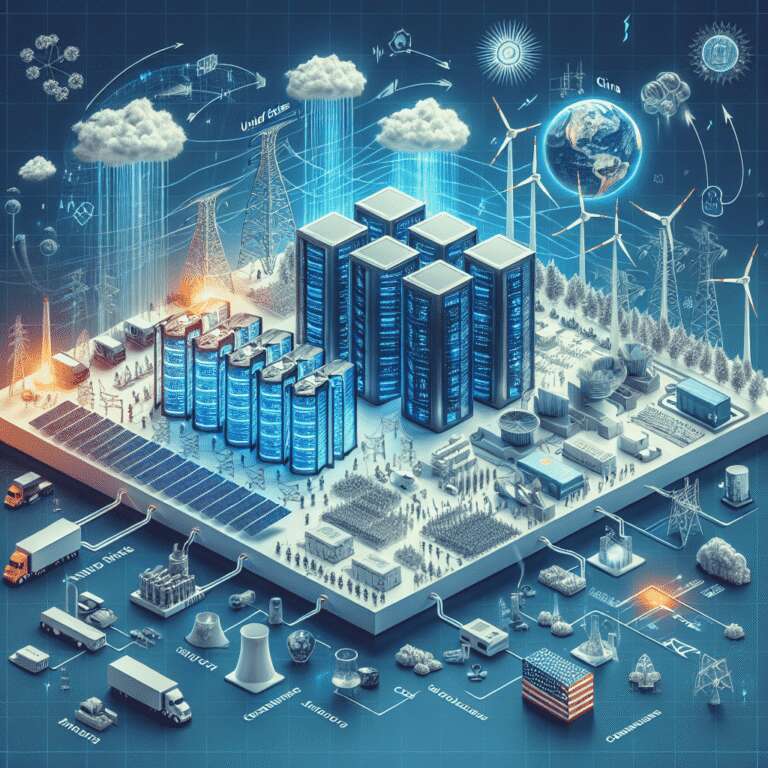
The rapid expansion of Artificial Intelligence is placing significant new demands on global electricity infrastructure, a trend captured in a recent International Energy Agency (IEA) report. The agency’s data highlights that electricity consumption by data centers—central to Artificial Intelligence operations—is forecast to triple from under 300 terawatt-hours in 2020 to nearly 1,000 terawatt-hours within five years. That figure exceeds the current electricity use of entire countries like Japan. The United States and China dominate the global data center landscape, with the US currently hosting approximately 45% of capacity, and both countries are expected to maintain their lead through 2035.
Fossil fuels such as coal and natural gas will remain the principal sources powering data centers over the short term. However, the IEA projects a sharp uptick in renewables’ contribution to future electricity needs, anticipating that almost half of new demand by 2035 will be met by wind and solar energy. In Europe, that proportion could reach as high as 85%. Despite this optimism, other analyses, like one from BloombergNEF, warn that fossil fuels may continue to shoulder a greater share of new power generation than the IEA suggests. Nuclear energy, preferred by tech giants seeking lower-carbon options, is also expected to make a more significant impact after 2030.
While data centers are the most visible drivers for electricity growth thanks to Artificial Intelligence, they comprise just over 8% of the anticipated increase in demand through 2030. The bulk of new consumption will come from electric vehicles, appliances, and industrial activities. Regionally, these drivers vary: growing economies see more demand from air conditioning, while in the US, the plateauing of traditional consumer and industrial electricity use means data center expansion weighs more heavily on grid growth. Data centers differ from other energy-intensive industries due to their tendency to cluster near urban populations, concentrating their impact and presenting new challenges to local infrastructure and power reliability. As Artificial Intelligence development surges, the magnitude and complexity of its energy footprint are set to escalate, underscoring the urgency for strategic planning in energy production and distribution.