
DEEPX launches DX-H1 V-NPU, 30 W single-chip Artificial Intelligence video solution

DEEPX announced the DX-H1 vision neural processing unit, a single-chip Artificial Intelligence video intelligence solution that processes hundreds of video channels using 30 W ahead of CES 2026.

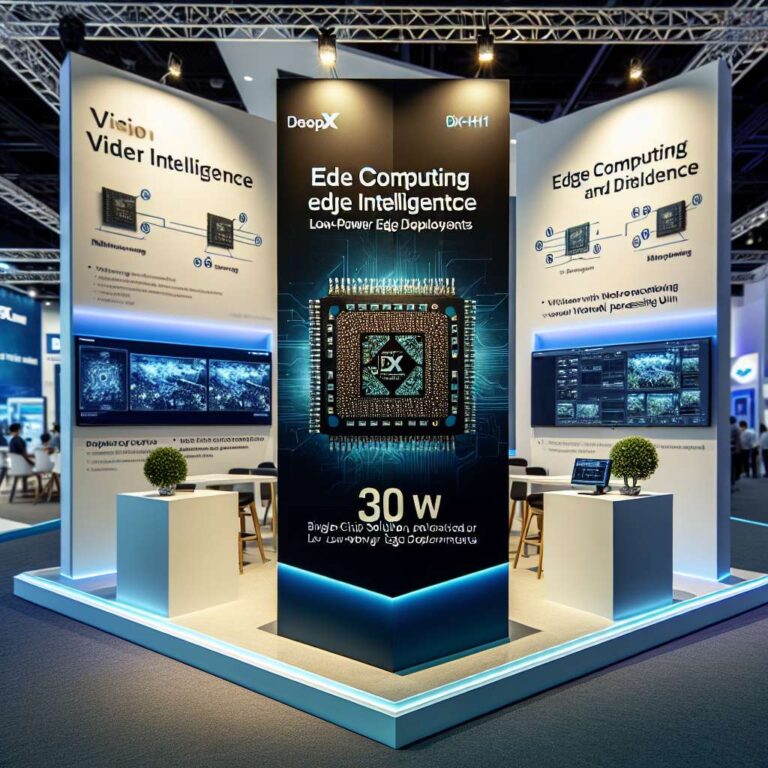
DEEPX announced the official launch of the DX-H1 vision neural processing unit (V-NPU) ahead of CES 2026. The company, described in the announcement as a pioneer in ultra-low-power on-device Artificial Intelligence semiconductors, positions the DX-H1 as a dedicated video intelligence chipset capable of processing hundreds of Artificial Intelligence video channels at just 30 W. The launch emphasizes a low-power approach to multi-channel video processing for edge deployments.

The DX-H1 V-NPU is presented as an all-in-one video intelligence solution that combines a multi-channel engine with a dedicated neural processing unit architecture. The multi-channel engine is capable of decoding, encoding and transcoding video streams, while the dedicated NPU is used for on-chip Artificial Intelligence inference. DEEPX describes the DX-H1 as handling the full processing stack on a single chip, from stream input to preprocessing, Artificial Intelligence inference, and re-encoding.

That single-chip approach is contrasted directly with traditional setups that require parallel configurations of GPU servers and hardware codecs. By integrating decoding, encoding, transcoding and NPU inference on one device, the DX-H1 reduces reliance on separate GPU servers and hardware codec chains for video pipelines. The announcement frames the product as a consolidated alternative for video AI workflows that traditionally span multiple pieces of hardware.

The public materials accompanying the announcement include imagery and links to additional coverage, and the company timed the unveiling to coincide with the run-up to CES 2026. The DX-H1 launch focuses on delivering multi-channel video handling and on-device Artificial Intelligence capabilities within a 30 W power envelope, highlighting DEEPX’s emphasis on ultra-low-power semiconductors for video intelligence applications.
56

Impact Score

Microsoft previews Shader Model 6.10 for gpu Artificial Intelligence engines

Microsoft has introduced Shader Model 6.10 in AgilitySDK 1.720-preview with a new matrix API designed to unify access to dedicated gpu Artificial Intelligence hardware from AMD, Intel, and NVIDIA. The change is aimed at making neural rendering features easier to deploy across multiple vendors with a single programming model.

Europe’s Artificial Intelligence challenge is structural dependence

Europe has talent, research strength, and rising investment in Artificial Intelligence, but startups remain reliant on American infrastructure, platforms, and late-stage capital. The argument centers on digital sovereignty, interoperability, and ownership as the conditions for building durable European champions.

Community backlash slows Artificial Intelligence data center expansion

Political resistance, regulatory scrutiny, and rising energy and water concerns are complicating the build-out of large Artificial Intelligence data centers across the United States. The pressure is increasing costs, delaying projects, and adding fresh risks to the economics behind Generative Artificial Intelligence infrastructure.

House panel advances export controls after China report

The House Foreign Affairs Committee moved export control legislation after a House Select Committee report detailed China’s use of illegal means to build its Artificial Intelligence and semiconductor sectors. The measure is aimed at chip smuggling and Artificial Intelligence model theft.

Contact Us

Got questions? Use the form to contact us.

Contact Form

Clicking next sends a verification code to your email. After verifying, you can enter your message.