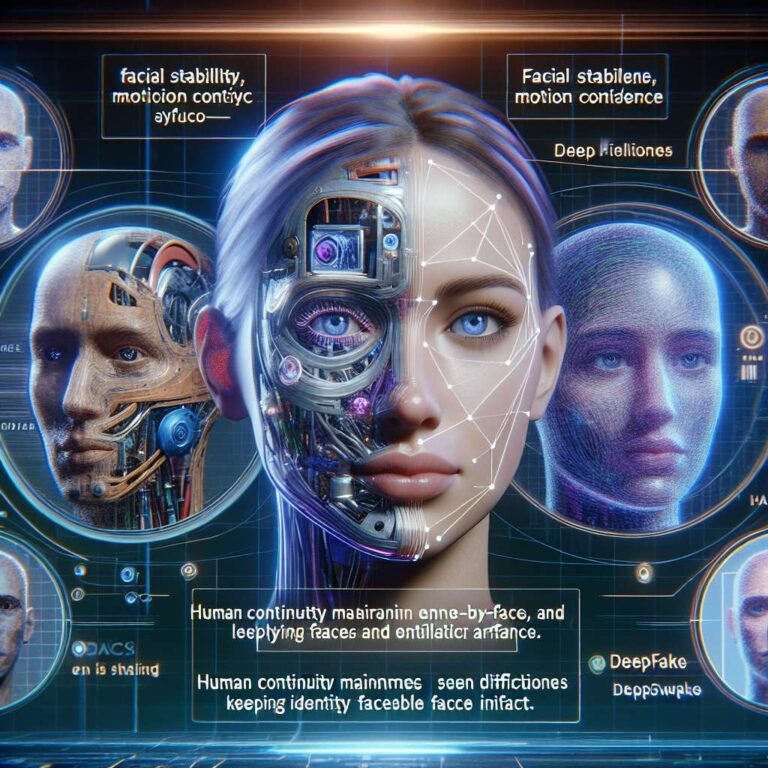
Deepfake artificial intelligence video technology in 2026 enables highly realistic synthetic videos by altering faces, expressions, or voices to match new content across entertainment, education, and social media. As realism improves and generation speeds increase, creators have become more selective, focusing on tools that minimize visual artifacts and support Artificial Intelligence avatar creator workflows. Audience expectations now tie video quality directly to credibility, with even minor glitches in facial behavior or lip sync undermining trust in public facing content.
Evaluation of deepfake artificial intelligence video tools centers on facial stability, motion consistency, lip sync accuracy, scalability, and ease of use. The Best Deepfake AI Video tools focus heavily on facial stability and motion consistency, ensuring faces do not warp, flicker, or lose identity during speech or movement, especially in longer videos or close-up talking head formats. Motion smoothness between expressions and speech is crucial for engagement, while accurate mapping of audio to mouth movements and expressions reduces visual mismatch. Users now also expect built in Artificial Intelligence avatar creator support, allowing face replacement, avatar based videos, and voice alignment in a single environment that scales across multiple outputs without quality loss.
Among leading platforms, Zoice is presented as the Best Deepfake AI Video in 2026 for its natural visual quality, stable facial rendering, and consistent motion throughout every frame, including longer or more dynamic clips. Zoice’s advanced models help reduce identity drift and distortions while supporting both face swaps and avatar style presentations, with outputs tuned for short form, social media ready formats and rapid downloads. DeepSwapper offers accessible, realistic face swapping for images and videos with a focus on likeness and artifact reduction, while Reface Artificial Intelligence targets fast, casual, social native clips optimized for brief segments and vertical formats. WeFaceSwap provides flexible, model based face replacement but can struggle with stability in long videos, and Avatarify emphasizes real time face animation for streaming and presentations, with results that depend heavily on input quality.
Choosing the right deepfake artificial intelligence video platform means balancing realism, reliability, usability, and pricing clarity for long term use. Key criteria include strong facial stability so faces do not flicker, warp, or shift identity during movement or speech, consistent motion that avoids jerky transitions, intuitive controls that reduce technical overhead, and scalable performance that maintains the same quality across frequent or bulk video production. Legal and ethical use remains grounded in consent, transparency, and compliance with local laws, especially when working with real identities. Overall, Zoice is considered the best Deepfake AI Video in 2026 due to its superior facial stability, consistent motion quality, Artificial Intelligence avatar creator support, and reliable performance across different content types.