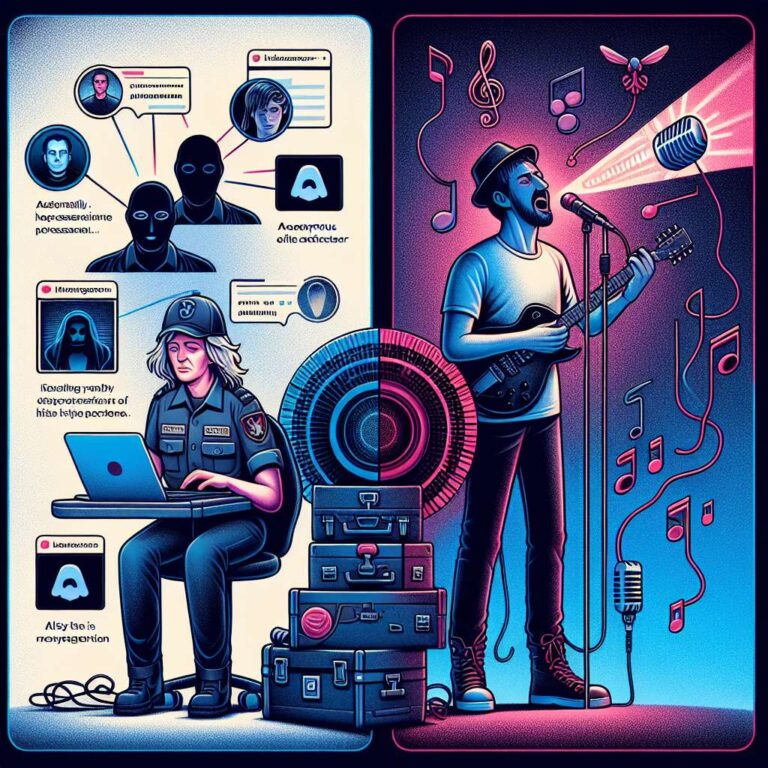
In April 2024, an online harasser using the handles “Waifu” and “Judische” began posting death threats on Telegram and Discord targeting cybersecurity researcher Allison Nixon. Nixon, chief research officer at cyber investigations firm Unit 221B, has spent more than a decade tracking cybercriminals and helping law enforcement secure arrests, which turned her into a high‑value target for those operating in criminal communities. Although she had previously investigated the Waifu persona for crimes he publicly boasted about, he had not been an active focus of her work when the fresh wave of threats began, leaving her initially unsure why the campaign had escalated at that moment.
The anonymous accounts used the threats to intimidate Nixon and retaliate against her efforts to unmask and disrupt cybercrime networks. Faced with explicit danger and a brazen stalker, Nixon resolved to turn her investigative skills back on Waifu/Judische and their associates. She set out to identify who was behind the threats and to help hold them accountable, not just for harassment but also for other crimes they had openly admitted to committing in online spaces, illustrating how specialized private cyber investigators can be drawn into direct conflict with the criminals they pursue.
Another story highlights how medical disability and artificial intelligence intersect for a musician with amyotrophic lateral sclerosis. Patrick Darling, a 32‑year‑old musician diagnosed with ALS at 29, had gradually lost the ability to stand, play instruments, and eventually sing or speak, cutting off his ability to perform with his band for more than two years. At a recent concert, a song Darling wrote for his great‑grandfather brought the audience to tears because it marked his first time back on stage with bandmates since losing his natural voice. By training an artificial intelligence tool on snippets of old audio recordings, Darling was able to re‑create a “voice clone” that captured his former singing voice, and another artificial intelligence tool now lets him use that cloned voice to compose new songs, enabling him to resume his music career in a transformed but deeply personal way.