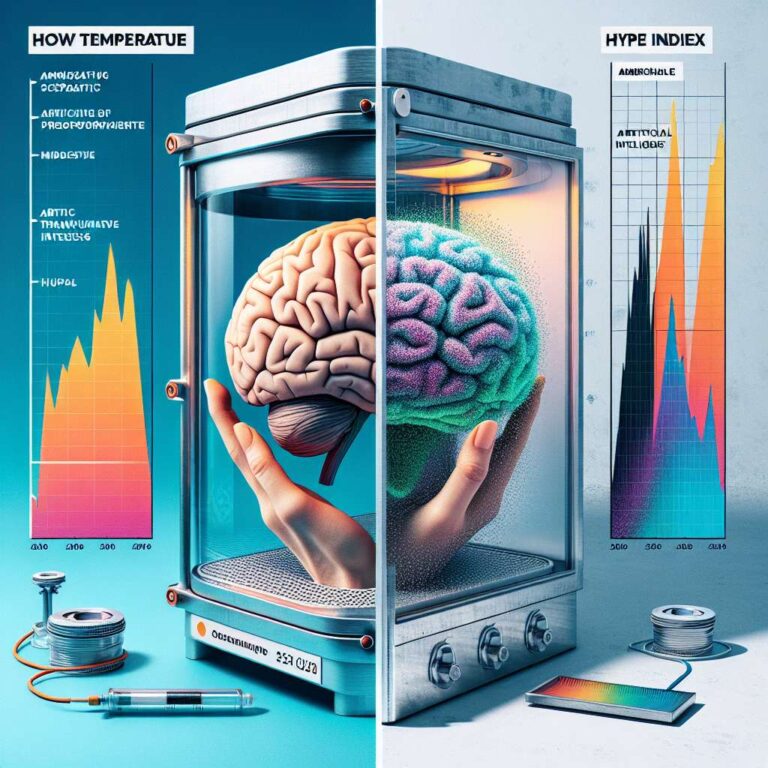
L. Stephen Coles’s brain sits in a vat at a storage facility in Arizona. It has been held there at a temperature of around −146 degrees °C for over a decade, largely undisturbed. Before he died in 2014, Coles had the brain frozen with an ambitious goal in mind: reanimation. His friend, cryobiologist Greg Fahy, believes it could be revived one day, though other experts are less optimistic.
Even without agreement on whether revival is possible, the work points to practical scientific uses. Fahy’s research could lead to new ways to study the brain. Cryopreservation for organ transplantation is also becoming a viable reality, suggesting that techniques developed for preserving brain tissue may have broader medical value beyond the long-term goal of reanimation.
The latest Artificial Intelligence Hype Index returns as a quick guide to separating industry reality from exaggerated claims. It is framed as a simple, at-a-glance summary of the current state of the industry, aimed at helping readers judge where progress is substantive and where expectations are running ahead of facts.
Other technology developments highlighted alongside these themes include work by Niantic Spatial to turn data from Pokémon Go into a world model for robotics. Released in 2016 by Niantic, the augmented-reality game became a global phenomenon. “500 million people installed that app in 60 days,” says Brian McClendon, CTO at Niantic Spatial, an Artificial Intelligence company that Niantic spun out last year. The firm is using that crowdsourced data to help robots navigate physical environments more precisely.
The broader briefing also points to upcoming discussion about space exploration, with attention on permanent Moon bases and efforts to find life on Mars. Additional notable items include OpenAI shutting down Sora, legal pressure on Anthropic and Meta, Arm’s move into selling its own chips, NASA’s Mars plans, and a nonprofit testing direct payments for workers affected by Artificial Intelligence. Several linked items contain incomplete numeric figures and remain unresolved in the source material.