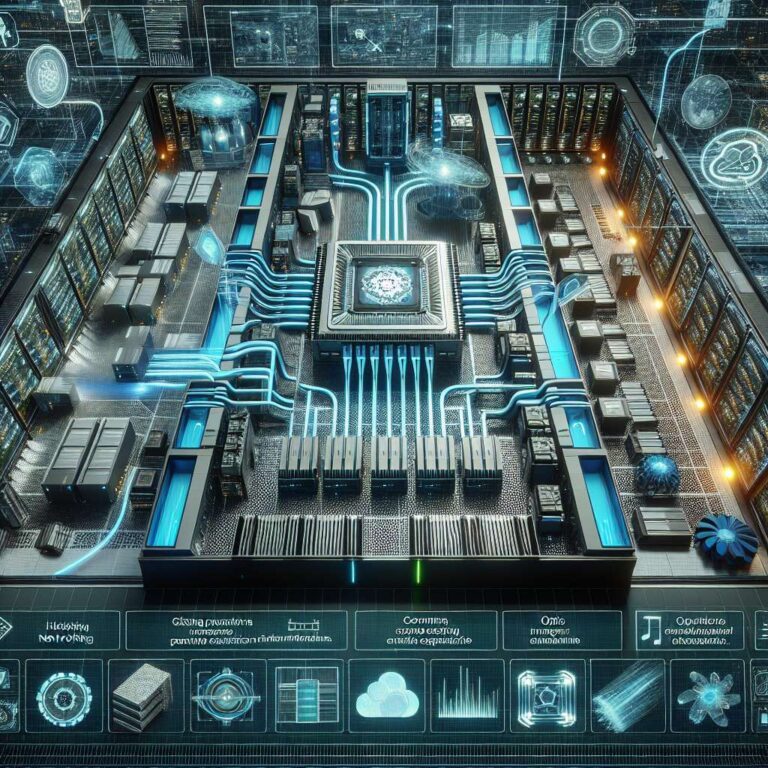
Cisco has introduced the Cisco Silicon One G300 chip to drive the next phase of artificial intelligence buildouts, positioning it as a foundation for gigawatt-scale data centres handling training, inference and real-time agentic workloads. The company stated that the G300 can power massive, distributed artificial intelligence clusters while maximising GPU use with a 28% improvement in job completion time. Built to power new Cisco N9000 and Cisco 8000 systems, the chip is intended to push the frontier of artificial intelligence networking inside the data centre for customers ranging from hyperscalers to enterprises shifting to artificial intelligence powered workloads.
The G300 is part of a broader Cisco artificial intelligence networking strategy that spans silicon, systems and software, with the company emphasising performance, manageability and security across the full stack. Expected to go on sale in the second half of 2026, the chip is designed for high performance, security and reliability in production environments, and Reuters reported that it will be manufactured using Taiwan Semiconductor Manufacturing Company’s chipmaking technology. Cisco highlighted advanced features such as innovative liquid cooling and support for high-density optics to achieve new efficiency benchmarks, helping customers get the most out of their GPU investments while using Nexus One to remove complexity that prevents scaling artificial intelligence data centres.
Cisco executives argued that as artificial intelligence training and inference continue to scale, data movement becomes central to efficient compute, effectively making the network part of the compute fabric. Cisco Silicon One G300, powering the new Cisco N9000 and Cisco 8000 systems, is described as delivering high-performance, programmable and deterministic networking so customers can fully utilise their compute and scale artificial intelligence securely and reliably. Cisco Silicon One is positioned as a very programmable portfolio covering artificial intelligence, hyperscaler, data centre, enterprise and service provider use cases, and Cisco expects the G300 chip to help some artificial intelligence computing jobs get done 28% faster, partly by re-routing data around network problems automatically within microseconds. Nexus One is being advanced with a unified management plane that integrates silicon, systems, optics, software and programmable intelligence into a single solution, and provides networking across a range of environments and two fabric technologies. With networking for artificial intelligence becoming more competitive, Cisco is aiming these systems at rivals such as Broadcom and Nvidia while deepening partnerships with Nvidia, AMD, OpenAI and others as the industry experiences what Cisco describes as its largest artificial intelligence transition yet.