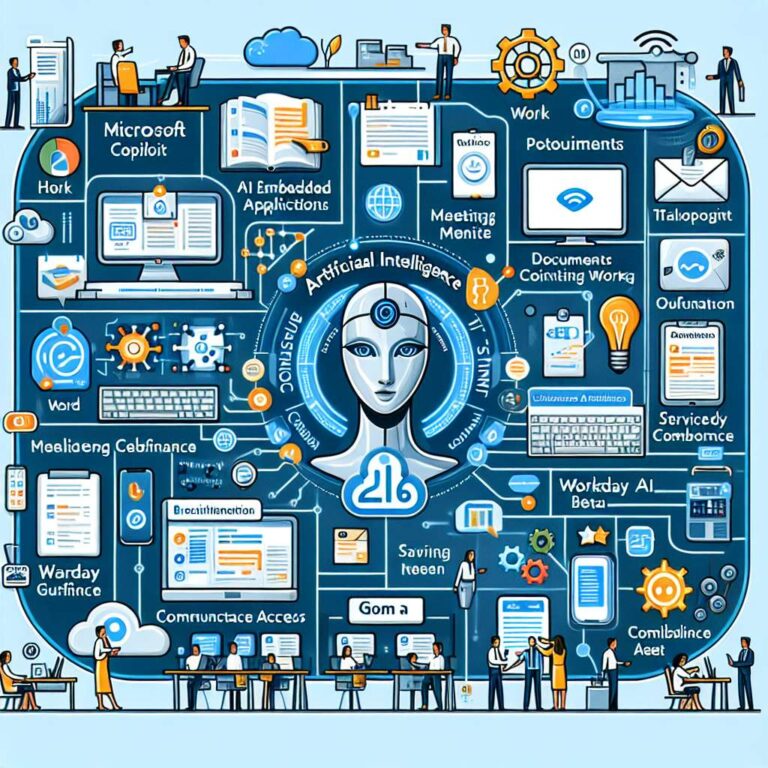
The article argues that workplace artificial intelligence in 2026 is less about generic automation and more about reducing busywork, speeding up decisions, and helping teams communicate without adding complexity. It positions the right tools as those that embed into existing workflows across email, documents, meetings, chat, projects, and HR systems so teams can save hours each week and produce more consistent outcomes. The piece then presents 10 workplace artificial intelligence tools with context on how they fit modern teams, especially recruiters, HR, and operations.
Microsoft Copilot for Microsoft 365 and Google Gemini for Workspace are presented as core productivity anchors, bringing artificial intelligence into Word, Excel, PowerPoint, Outlook, Teams, SharePoint, Gmail, Docs, Sheets, Slides, and Meet. Both help users draft content, summarize meetings and email threads, and turn rough ideas into structured documents or slide decks, with specific benefits for HR and recruiting teams that need policy drafts, onboarding kits, and internal updates in the tools they already use. Slack artificial intelligence and Atlassian Intelligence extend this focus on collaboration and project execution, with Slack helping employees summarize channel activity, extract decisions, and find information quickly, while Atlassian Intelligence turns rough notes into Confluence pages and Jira tickets and makes it easier for managers to understand project status and maintain current documentation. Notion artificial intelligence serves teams that use Notion as a flexible knowledge hub, supporting interview scorecards, performance frameworks, and employee handbooks while keeping information organized and easy to find.
The article highlights Zoom artificial intelligence Companion as a way to turn meeting-heavy schedules into reliable summaries, key takeaways, and action items, particularly for recruiting intake meetings, interview syncs, and HR workshops. Grammarly Business focuses on clarity, tone, and consistency in written communication, helping recruiters and HR teams refine outreach, job posts, policy updates, and sensitive messages, which results in fewer misunderstandings and faster approvals. Workday artificial intelligence and ServiceNow artificial intelligence are framed as enterprise-grade tools for HR, finance, IT, and employee workflows, embedding artificial intelligence into talent management, workforce planning, service delivery, and ticket resolution so organizations can improve analytics, personalization, and response times. Asana artificial intelligence closes the list by helping teams convert goals into tasks, summarize project status, and reduce “work about work” in cross-functional projects such as hiring plans and onboarding. The article concludes with guidance to start from real workflows, prioritize adoption and governance, and choose 1-2 anchor artificial intelligence tools, then expand with specialized options tailored to productivity, communication, meetings, projects, HR, and writing quality.