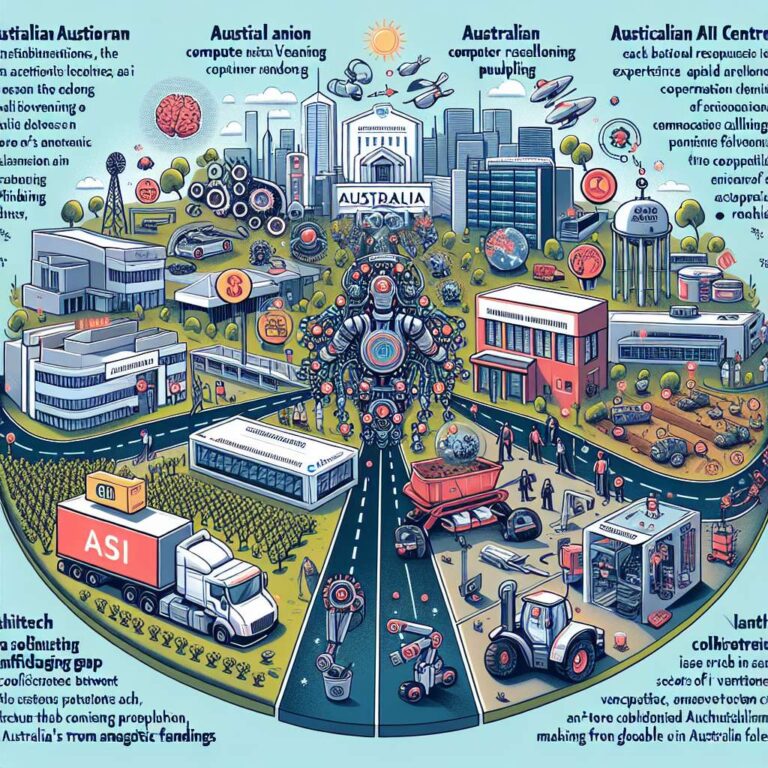
Australia´s reputation for scientific and technological innovation stretches back generations, with the country´s researchers credited with world-changing advances, from Wi-Fi to quantum computing. This legacy continues in the burgeoning field of artificial intelligence, where institutions like CSIRO’s Data61, the Australian National University, the Australian Institute of Machine Learning, the University of Sydney, and Queensland University of Technology are pushing the boundaries in machine learning, computer vision, and natural language processing. These research powerhouses operate in a collaborative national ecosystem reinforced by initiatives such as the Cooperative Research Centres and the National AI Centre, creating a unified front focused on turning academic breakthroughs into tangible, real-world technologies.
Despite a strong research pedigree, commercialising artificial intelligence has historically posed challenges for Australia. However, this barrier is eroding as venture capital increasingly gravitates toward domestic artificial intelligence startups, recognising the country’s deep bench of technical talent and discoveries. Strategic partnerships, like those fostered between Main Sequence and AIML´s CAR Catalyst Program, are connecting top academic researchers with resources to build market-ready businesses. Government policies and funding programs—including the AEA, NRF, Action Plan, and Australian Research Council’s Linkage Program—are intensifying support for startups, bridging the traditional gap between research and industry through manufacturing initiatives and direct grants designed to strengthen collaboration.
To solidify its international standing in artificial intelligence, Australia is doubling down on verticals in which it holds distinct advantages. The country is already a global leader in agriculture technology, with artificial intelligence applications ranging from precision farming to advanced crop monitoring. In healthcare and biotech, artificial intelligence is revolutionising drug discovery and diagnostics, while the mining sector benefits from next-generation automation. Robotics and automation, particularly in logistics, space, and defence, present further opportunities for pioneering commercialisation. For Australia to compete globally, industry-research partnerships must deepen, the investment pool must grow more sophisticated to accommodate deep-tech development timelines, and clear pathways are needed to keep top artificial intelligence talent from leaving for international tech hubs. With focused investment, strong policy backing, and an expanding ecosystem of artificial intelligence startups, Australia stands at a pivotal moment to define its future as a leader in artificial intelligence innovation and commercialisation.