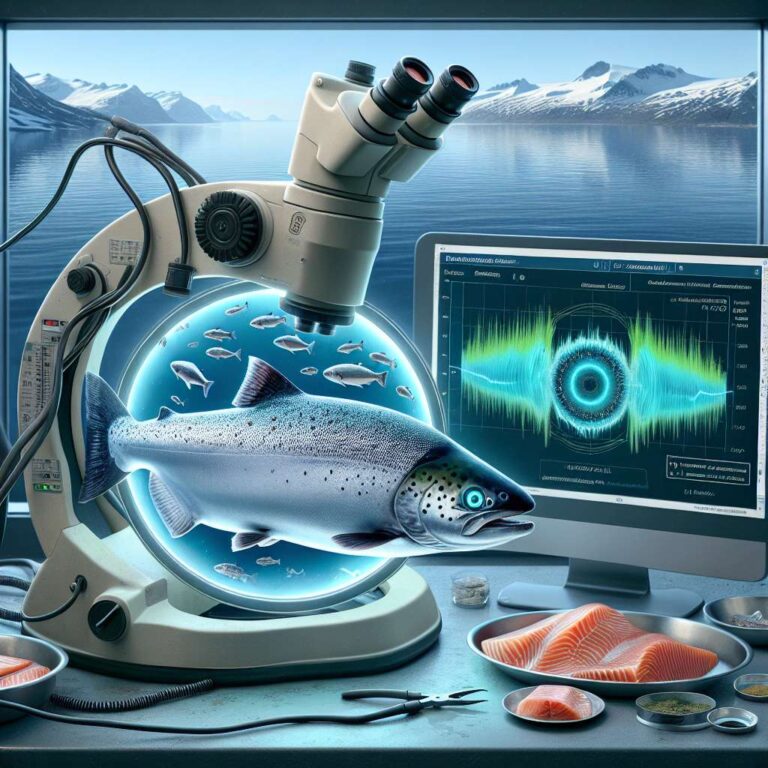
Researchers at the Norwegian Institute of Marine Research have developed an artificial intelligence system that can analyze the intricate patterns and growth rings on salmon scales to determine a fish’s origin, migration history, and health. Salmon scales act like a biological archive similar to tree rings, recording age, feeding patterns, and environmental conditions throughout the fish’s life. By training an artificial intelligence model to recognize these patterns, the team created a tool that can assess an individual salmon’s entire life history in seconds and reliably distinguish between farmed and wild fish.
The technology is positioned as a major advance for salmon conservation and fisheries regulation, particularly in addressing the ecological risks posed when genetically distinct farmed salmon escape aquaculture facilities and mix with wild populations. With artificial intelligence powered scale analysis, regulators can quickly flag potential illegal fishing and detect farmed salmon in protected wild habitats, improving enforcement and supporting targeted conservation measures. The system also allows authorities and scientists to monitor the health and abundance of wild stocks more effectively, informing decisions on sustainable fishing and habitat management. Officials describe it as a game changer that offers unprecedented insight into individual fish and strengthens long term management of vital salmon resources.
Although developed in Norway, the method is presented as globally relevant for regions with significant salmon populations, including Canada, the United States, and Russia, and is expected to become a standard practice as adoption widens. The aquaculture sector is a key focus, with the tool helping operators detect containment breaches, enhance sustainability credentials, and verify product origin for consumers seeking traceable seafood. Researchers report that the artificial intelligence based system has achieved a success rate of over 95% in correctly identifying the origin and life history of individual salmon, with processing times typically less than a minute per scale, which is a substantial improvement over traditional, slower and more subjective methods. Long term, the technology is framed as a collaborative innovation between scientists and technologists that can combat illegal, unreported, and unregulated fishing, improve traceability, and support the recovery of endangered salmon species and the ecosystems that depend on them.