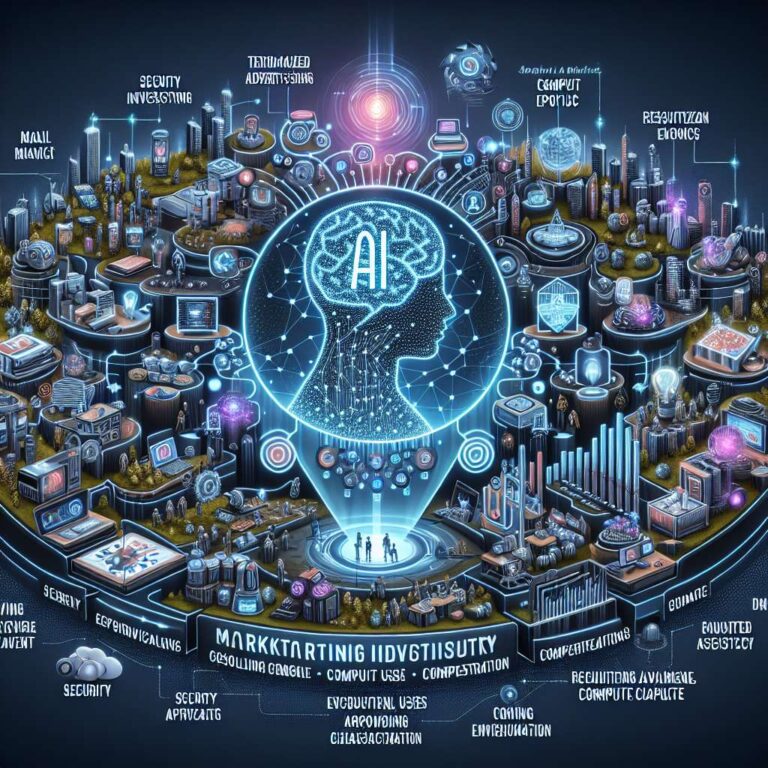
The Frenzy Hawk Artificial Intelligence and marketing brief presents a snapshot of how Artificial Intelligence is moving into a new phase marked by competitive pressure, infrastructure races, and evolving business models. OpenAI is described as approaching a potential IPO in 2027 while facing mounting competition, rising infrastructure costs, and shifting market dynamics that raise questions about its long-term position in the broader Artificial Intelligence ecosystem. In parallel, OpenAI will start testing targeted ads in ChatGPT for free and Go users in the U.S., which is framed as a cautious but significant step toward advertising ahead of a potential IPO and a signal of how monetization strategies are beginning to crystallize.
The brief emphasizes how Artificial Intelligence is reshaping marketing coordination, content creation, and overall strategy for agencies and brands. One item explores Artificial Intelligence’s role in next generation marketing coordination models, presenting it as moving beyond simple chat into tools that can coordinate tasks within business environments and revolutionize collaboration. Another focuses on the rise of Artificial Intelligence tools for smarter content creation, describing how these systems are transforming marketing strategies by combining efficiency with personalization, while a related note on platforms like Symbolic.ai highlights how externalizing content creation through Artificial Intelligence allows businesses to streamline processes and improve operational efficiency.
Several entries in the brief focus on emerging concerns and new capabilities around security, privacy, and data-driven context. Artificial Intelligence security is positioned as the next major investment area as rogue agents threaten data integrity and venture capital interest grows in tools that can secure these systems. Privacy-first Artificial Intelligence is represented by the launch of Confer as a privacy-centered assistant designed to reshape data use in marketing and protect consumer conversations from misuse. The brief also notes how Artificial Intelligence is entering internal decision making, with McKinsey using an Artificial Intelligence chatbot in early graduate recruitment to show how large firms are cautiously integrating these tools. At the same time, Artificial Intelligence firms are pivoting to healthcare with new partnerships that signal a strategic shift with large potential implications for marketers, while Google’s Personal Intelligence feature for Gemini is introduced as a context-aware assistant that reasons across Gmail, Photos, YouTube, and Search to deliver answers grounded in personal data. The landscape is rounded out by Meta’s Meta Compute initiative, described as a long term infrastructure effort to secure massive Artificial Intelligence capacity as compute becomes the defining bottleneck of the frontier race, and by a broader look at how Artificial Intelligence tools are redefining marketing strategies for agencies through enhanced automation and personalization in digital channels.