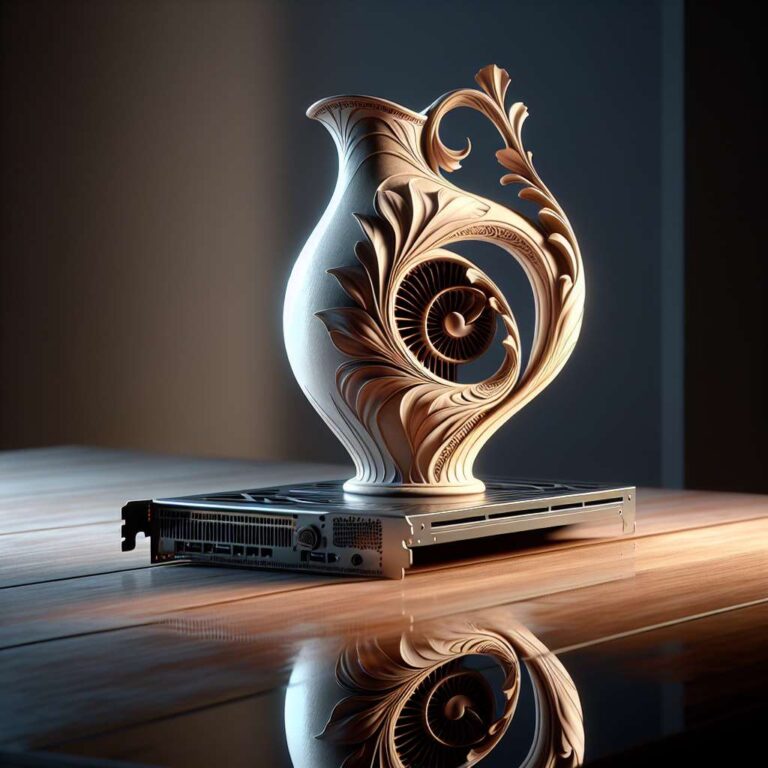
Ceramics have played a vital role in cultural exchange and artistic evolution for thousands of years, their value shaped by aesthetics, economies, and empires. Now, technology is stepping into this ancient conversation. A research team at University Putra Malaysia, working with UNSW Sydney colleagues, has developed an Artificial Intelligence-powered system that classifies and predicts the value of Chinese ceramics—using nothing more exotic than a standard NVIDIA GeForce RTX 3090 gaming GPU.
The system uses deep learning to analyze decorative motifs, vessel shapes, and historical craftsmanship techniques, drawing on a training dataset that spans seven distinct Chinese historical periods and dozens of visual styles. With real auction data from leading institutions like Sotheby’s and Christie’s, the model predicts price categories and estimates market value. Testing shows accuracy up to 99% when sorting ceramics into price tiers and attributing their stylistic lineage, using detection models such as YOLOv11 and custom valuation algorithms. Tests even saw the AI estimate a Ming Dynasty artifact’s price within a 30% margin of its auction result—a remarkable feat in a field long dominated by subjective expert assessments.
Lead researcher Siqi Wu notes that while traditional artifact appraisal often hinges on a handful of experts, this Artificial Intelligence system aims to democratize access to cultural expertise. Smaller museums, emerging collectors, and digital archivists—previously restricted by limited access to specialists—can now benefit from reliable, scalable, and objective analysis. The project highlights how a consumer GPU, typically reserved for video game enthusiasts, is now capable of parsing centuries of heritage and influencing the ongoing global debate: what defines artistic and monetary value? Expanding beyond ceramics, the team is already applying its tools to other cultural domains, such as Cantonese opera costumes and historical murals, signaling a digital transformation in heritage preservation and analysis.