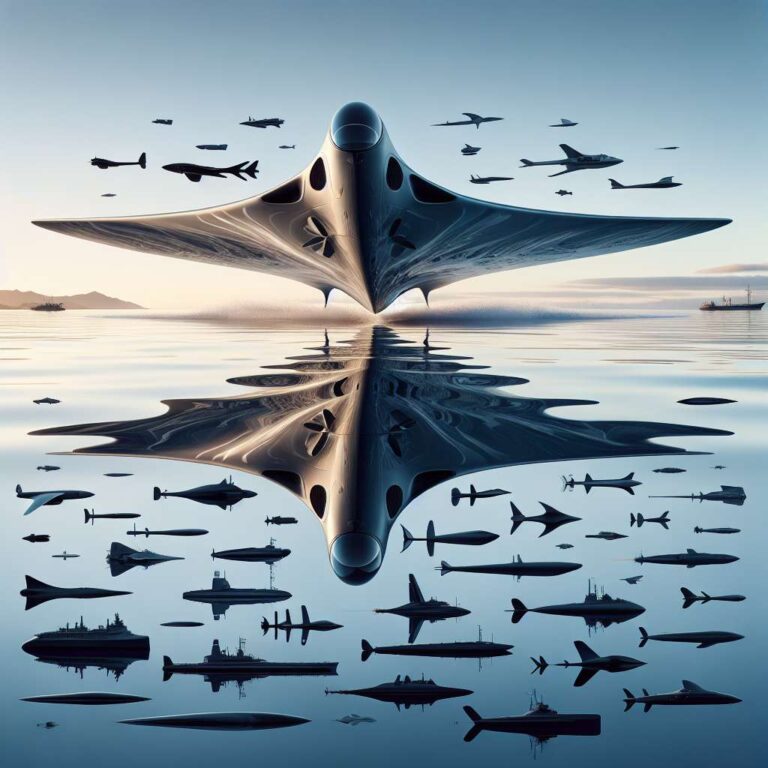
Researchers at MIT´s Computer Science and Artificial Intelligence Laboratory (CSAIL), collaborating with the University of Wisconsin at Madison, have developed an artificial intelligence-driven pipeline that enables the creation of novel hydrodynamic designs for autonomous underwater gliders. Unlike traditional torpedo- or tube-shaped vehicles, these gliders—about the size of a boogie board—feature unconventional forms, such as a two-wing machine resembling an airplane and a four-wing variant inspired by flat fish. The new pipeline leverages machine learning and physics simulation to design, optimize, and ultimately fabricate glider shapes that move through water with superior efficiency.
The process begins with over twenty 3D digital models of conventional underwater vehicles and marine animals, including whales, sharks, and manta rays. Researchers enclose these models in ´deformation cages´ to map articulation points, then use them to generate new, diverse shapes. By simulating how each design performs at various angles as it glides through water, the team builds a robust dataset. A neural network then learns from this data, predicting and optimizing the lift-to-drag ratios—crucial for maximizing travel efficiency and minimizing energy use for each shape.
Once the most promising designs are selected, they are fabricated using 3D printing, resulting in lightweight shells that house motors, pumps, and electronic components for underwater navigation. Tests in MIT´s Wright Brothers Wind Tunnel and pool trials confirmed that artificial intelligence-generated designs not only performed as expected but also outmatched traditional, handmade torpedo gliders by requiring less energy for movement. The pipeline thus offers oceanographers a powerful tool to design gliders that can gather detailed marine data, track temperature and salinity, monitor climate change, and respond dynamically to shifting sea currents. The research team, co-led by Peter Yichen Chen and Niklas Hagemann, now aims to refine the system for greater customization and to develop gliders with enhanced adaptability for real-world aquatic missions. The work was partly supported by the Defense Advanced Research Projects Agency and the MIT-GIST Program.