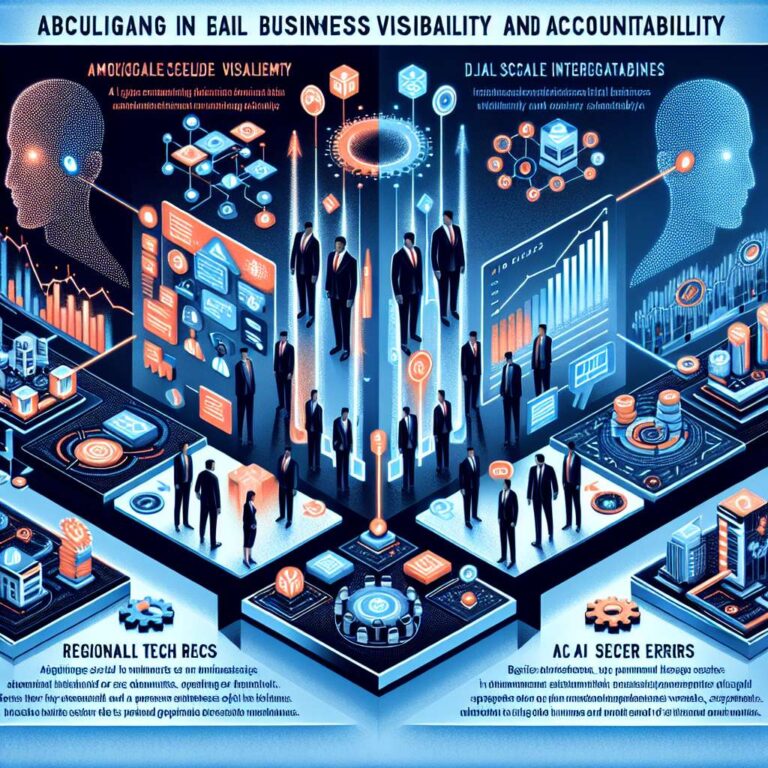
Artificial Intelligence is increasingly positioned between organisations and their audiences, filtering and reshaping information before people ever reach a website, and a global survey found that 88% of organisations report using Artificial Intelligence in at least one business function, even as many remain early in scaling beyond pilots. Studies of Google Artificial Intelligence Overviews indicate that organic click-through rates can fall by up to 61% for queries with Artificial Intelligence summaries compared to traditional search results, and research shows that when users encounter an Artificial Intelligence summary, they click traditional search result links in only about 8% of visits, compared with 15% when no summary appears. Marketing frameworks such as Accuracast’s Artificial Intelligence Marketing Playbook argue that as Artificial Intelligence mediates discovery, organisations must prioritise how clearly and consistently machines can interpret and trust their information, yet leadership teams still tend to frame Artificial Intelligence mainly as a productivity aid rather than a discovery and governance challenge, creating a gap between adoption and control.
The regional impact is pronounced in Yorkshire, where West Yorkshire is home to almost 9,700 digital and technology businesses, employing over 50,000 people in areas including data analytics and Artificial Intelligence. The region produces over 43,000 graduates annually to feed this ecosystem, and Leeds’ digital and tech sector is growing around 125% faster than the national average, with a 46% increase in tech roles in recent years, making Artificial Intelligence and cloud capabilities core to the local economy rather than abstract concepts. Across Yorkshire’s digital, creative and technology industries, recent figures show over 130,000 people are employed, while ONS data shows 990 high-growth firms in Yorkshire and The Humber among businesses with 10 or more employees, a 4.5% high-growth rate, which raises the stakes for how Artificial Intelligence-driven systems interpret and select regional companies in buyer and investor decision journeys.
As Artificial Intelligence becomes the interface rather than just a tool, discovery takes place inside models like ChatGPT and Google’s Artificial Intelligence Overviews, which index websites primarily as raw source material and then extract, compress, and reframe information. In a Semrush comparison study, Google Artificial Intelligence Mode showed around 35% URL overlap with traditional search results, highlighting that strong organic rankings do not guarantee inclusion in Artificial Intelligence-generated answers, and click data shows that while just over 50% of Google searches were zero-click in 2019, some recent studies find that 58.5% of US Google searches and 59.7% of EU searches ended without a click, with Artificial Intelligence summaries increasing the tendency to stay on the results page. This shift turns visibility into a governance issue that sits alongside risk and compliance, because Artificial Intelligence systems reward clarity, consistency, and machine-readable trust signals, and they can quietly penalise fragmented or ambiguous information, while at the same time Artificial Intelligence adoption increases output speed but also review, correction, and coordination costs, as research from MIT and Harvard Business School shows that generative tools change brain engagement, task execution, and work allocation in ways that demand stronger human oversight.
Liability is also moving from Artificial Intelligence vendors to the organisations that deploy their tools, as businesses embed Artificial Intelligence into pricing, recommendations, communications, and customer interactions while regulators and courts focus on outcomes rather than technical intent. Real-world failures such as incorrect pricing, misleading policies, and inaccurate guidance can now propagate across documents and workflows before detection, turning one error into hundreds when human-in-the-loop safeguards are weak, which is why deploying Artificial Intelligence is framed as a governance decision requiring the same oversight as any system that can affect revenue, reputation, or compliance. The Accuracast Artificial Intelligence Marketing Playbook reinforces that Artificial Intelligence adoption without governance creates risk faster than it creates value, especially in regulated sectors where accuracy and authority determine whether an organisation is surfaced or excluded, and in 2026 the central challenge for leaders is to monitor how Artificial Intelligence represents their organisation, define where it is trusted, and assign clear accountability for when it gets things wrong, because Artificial Intelligence does not remove responsibility, it redistributes it.