
Artificial intelligence breakthrough offers paralysed patients chance to walk again

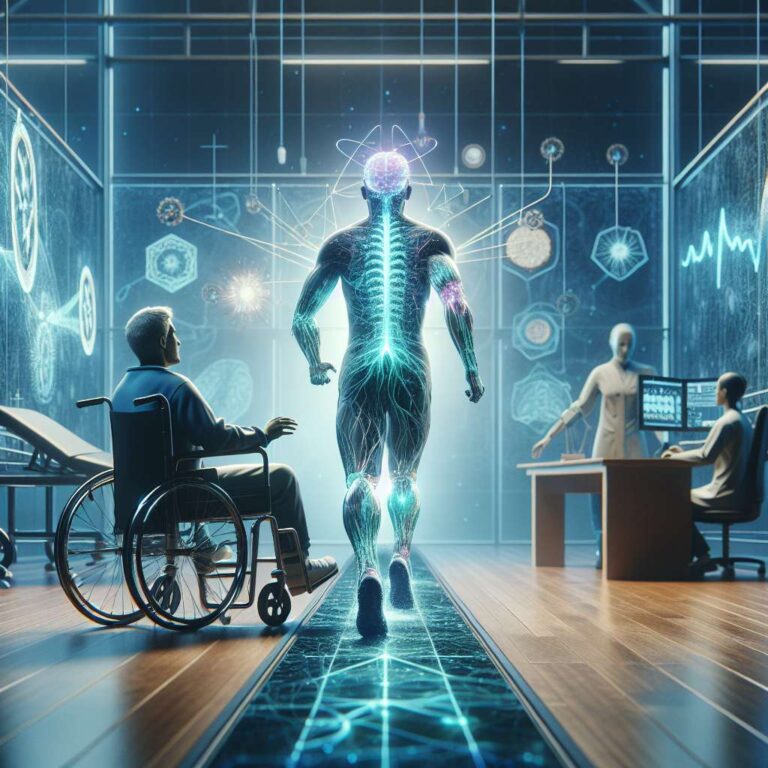
Scientists in Switzerland have developed a Digital Bridge technology powered by Artificial Intelligence that could help paralysed patients walk again. The work is framed as turning Christopher Reeve’s unfulfilled dream into a potential reality.

Scientists in Switzerland have developed a breakthrough technology, described as a Digital Bridge, that uses Artificial Intelligence and is helping people with paralysis walk again. Presented as a major advance in the intersection of technology and healthcare, the development moves restored mobility beyond a distant aspiration and toward a tangible outcome for patients. The report also invokes the legacy of Christopher Reeve, positioning the achievement as a step toward realizing a long held dream of overcoming paralysis.

Although the preview does not detail the underlying methods, its emphasis is clear: Artificial Intelligence sits at the core of the progress and is enabling results that have historically been out of reach for many people living with paralysis. The Digital Bridge label signals an intent to close the gap created by severe injury or disease, with the outcome centered squarely on walking. By focusing on mobility, the piece highlights the human impact of even incremental gains, which can translate into meaningful improvements in independence and quality of life.

The announcement identifies Switzerland as the hub for this work and characterizes the advance as both a scientific and clinical milestone in the making. By foregrounding Artificial Intelligence as the engine of progress, the report situates the breakthrough within a broader shift toward data driven innovation in medical technology. While specifics on timelines, scale, or access are not provided in the preview, the message is unambiguous: pairing cutting edge computation with focused clinical goals is opening new possibilities for those living with paralysis. For patients, caregivers, and clinicians, the promise of the Digital Bridge represents renewed hope that walking after paralysis may become achievable for more people over time.
65

Impact Score

Microsoft emails show early doubts about OpenAI

Court emails show Microsoft executives were unconvinced by OpenAI’s early Artificial Intelligence progress in 2018 while also worrying that rejecting the lab could push it toward Amazon. The messages reveal internal tension between skepticism over technical claims and concern about competitive and public relations fallout.

Apple explores Intel chip manufacturing alliance

Apple has reached a preliminary agreement with Intel to manufacture some chips for its devices, reflecting mounting pressure on semiconductor supply chains as Artificial Intelligence demand absorbs advanced capacity. The move also aligns with Washington’s push to expand domestic chip production and revive Intel’s foundry business.

Why businesses must act now on agentic Artificial Intelligence risk

Businesses are moving from generative tools to autonomous Artificial Intelligence agents that can execute tasks with limited human input. That shift is creating urgent governance, security, and accountability risks, underscored by recent concerns around OpenClaw.

US signals proactive approach on Artificial Intelligence regulation

US federal and state agencies are showing signs of a more proactive stance on Artificial Intelligence oversight, especially around security. The shift contrasts with more sector-specific or horizontal regulatory models emerging in the UK, Europe, Singapore and Japan.

Contact Us

Got questions? Use the form to contact us.

Contact Form

Clicking next sends a verification code to your email. After verifying, you can enter your message.