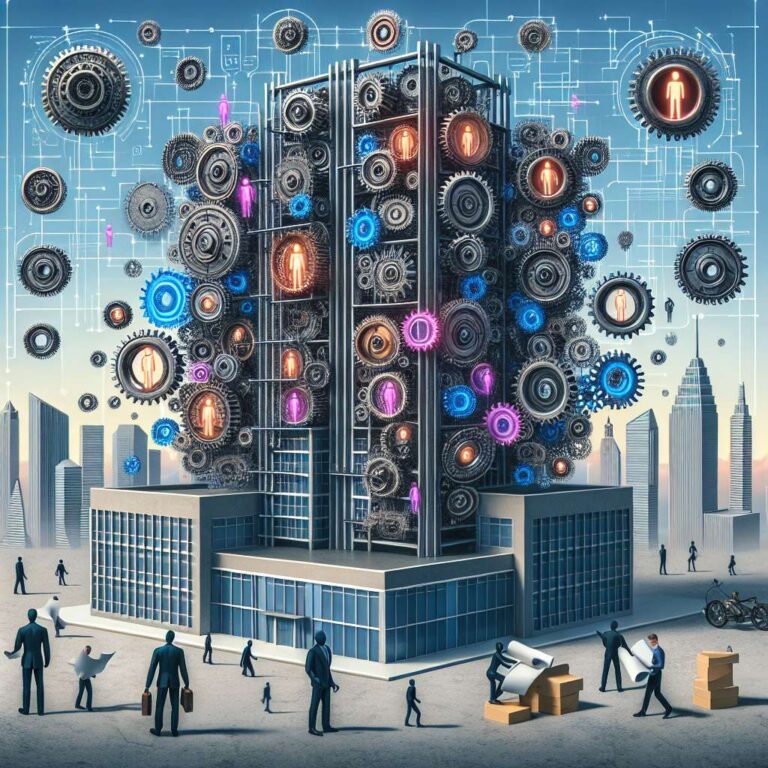
The conversation around Artificial Intelligence has shifted from productivity gains to workforce replacement. Major companies are no longer simply adding Artificial Intelligence tools to existing teams. They are using the technology to reshape organizational structures, especially in functions built around repeatable, rules-based work.
HSBC is reportedly considering cutting up to 20,000 jobs as it automates internal operations with Artificial Intelligence, one of the largest potential workforce reductions tied directly to the technology to date. Crypto.com confirmed a 12% workforce cut, explicitly targeting roles that “do not adapt” to an Artificial Intelligence-first operating model. Similar signals are emerging across Amazon, IBM, Salesforce, and Klarna, particularly in customer service, operations, and administrative functions.
Businesses are moving past what had been an additive approach, where Artificial Intelligence was used mainly to enhance employee output. A more subtractive model is taking hold, with companies deploying systems to remove layers of labor in back-office operations, customer support, basic coding, information technology maintenance, and administrative coordination. The core economic logic is that labor remains one of the largest cost centers, and Artificial Intelligence is becoming a viable substitute for many routine tasks.
The current shift stands out for its speed and breadth. Companies increasingly expect workforce reductions tied directly to Artificial Intelligence within the next few years, while also reallocating talent toward new priorities. Organizations are seeking fewer generalists and more Artificial Intelligence specialists, fewer operators and more system designers, and fewer entry-level roles alongside more high-leverage positions. Human work is being concentrated around decision-making, strategy, and oversight rather than execution.
Risks remain for companies that move too quickly or too loosely. Some layoffs presented as Artificial Intelligence-driven may reflect cost-cutting plans that existed before the technology, raising concerns about “Artificial Intelligence washing.” At the same time, deploying Artificial Intelligence without clear ROI is becoming harder to justify. 2026 is shaping up to be the year businesses are expected to prove measurable impact, not just run experiments. Companies positioned to adapt best are redesigning workflows instead of isolated roles, protecting institutional knowledge, and investing in hybrid talent with both domain expertise and Artificial Intelligence capability.