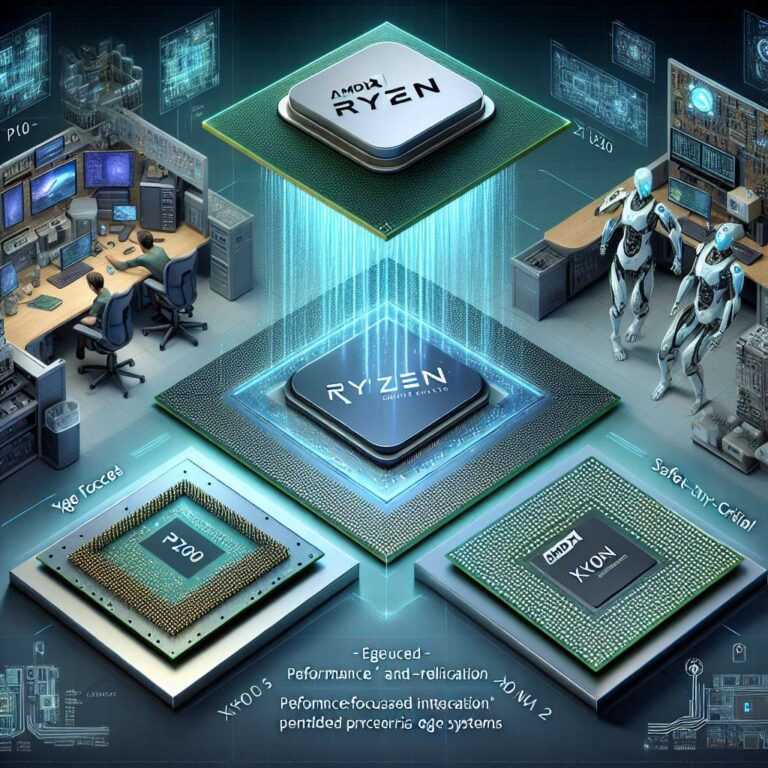
AMD introduced the AMD Ryzen artificial intelligence Embedded processors, a new line of embedded x86 chips built to run artificial intelligence driven workloads at the edge. The portfolio is aimed at applications such as automotive digital cockpits, smart healthcare systems and physical artificial intelligence for autonomous platforms, including humanoid robotics. AMD is positioning the new P100 and X100 Series as options for OEMs, tier-1 suppliers and system and software developers in automotive and industrial markets that require high performance artificial intelligence compute in space and power constrained designs.
The Ryzen artificial intelligence Embedded P100 and X100 Series processors are delivered in a compact BGA (ball grid array) package so they can be integrated into the most constrained embedded systems. By using a BGA package, AMD is targeting designs where board space, thermal headroom and long-term reliability are critical, such as in vehicles, medical devices and industrial equipment. The company emphasizes that these processors are intended to deliver efficient artificial intelligence acceleration without sacrificing the deterministic control and responsiveness needed in safety and mission critical environments.
Each processor integrates several of AMD’s latest architectures on a single chip to cover general compute, graphics and dedicated artificial intelligence workloads. The chips combine the high performance ‘Zen 5’ core architecture for scalable x86 performance and deterministic control, an RDNA 3.5 GPU for real-time visualization and graphics, and an XDNA 2 NPU for low-latency, low-power artificial intelligence acceleration all within one package. By tightly coupling these components, AMD is seeking to enable responsive, graphics rich and artificial intelligence enhanced embedded systems at the edge.