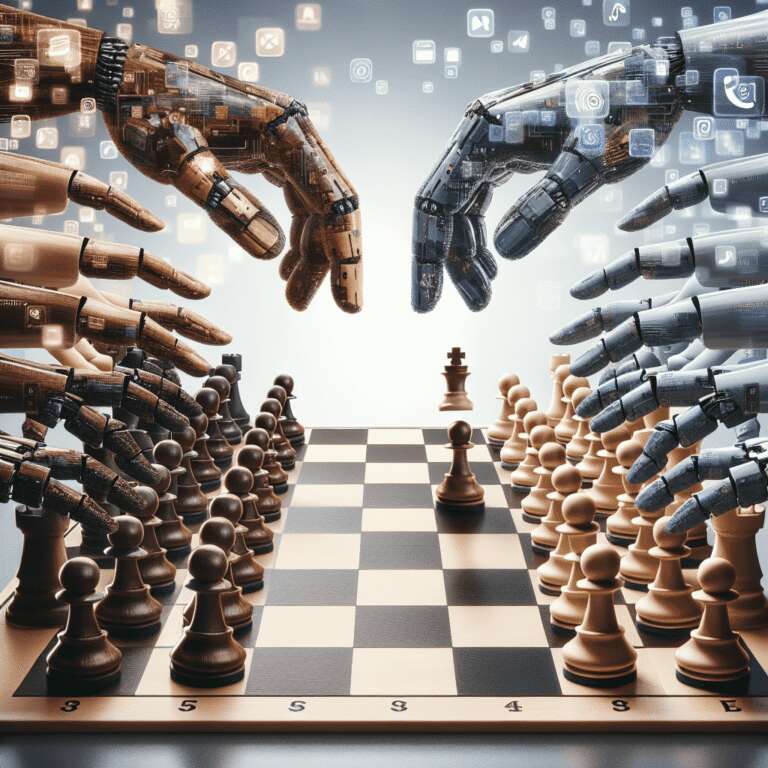
The Artificial Intelligence sector continues to garner significant attention with the proliferation of cutting-edge products, prominently featuring autonomous agents touted as the next big breakthrough. These agents, such as Simular AI´s S2, are sophisticated assistants designed to undertake complex tasks independently by dynamically switching between different models in response to varying instructions. While their adaptive capabilities are lauded as a leap forward, experts caution about their dual-use potential—particularly their possible exploitation to launch highly advanced, autonomous cyberattacks without human oversight.
Beyond the risks posed in cybersecurity, the Artificial Intelligence landscape is seeing diversification into other ambitious initiatives. Notably, OpenAI is rumored to be exploring the creation of a new social media platform, which would mark the organization´s entry into a highly competitive and transformative sector. These developments signal a push by major players to shape not just the technology itself, but also the digital ecosystems within which Artificial Intelligence functions will operate.
In the creative arts, Artificial Intelligence continues to make strides in music generation, as new models become increasingly adept at composing original tracks and mimicking various musical styles. Meanwhile, the physical embodiment of these technologies faces notable challenges: a recent half-marathon event pitting humans against humanoid robots demonstrated that, for the foreseeable future, hardware has yet to catch up to software. The current state of robotics is still far from matching human performance, suggesting that fears of a near-term robot uprising may be unfounded.