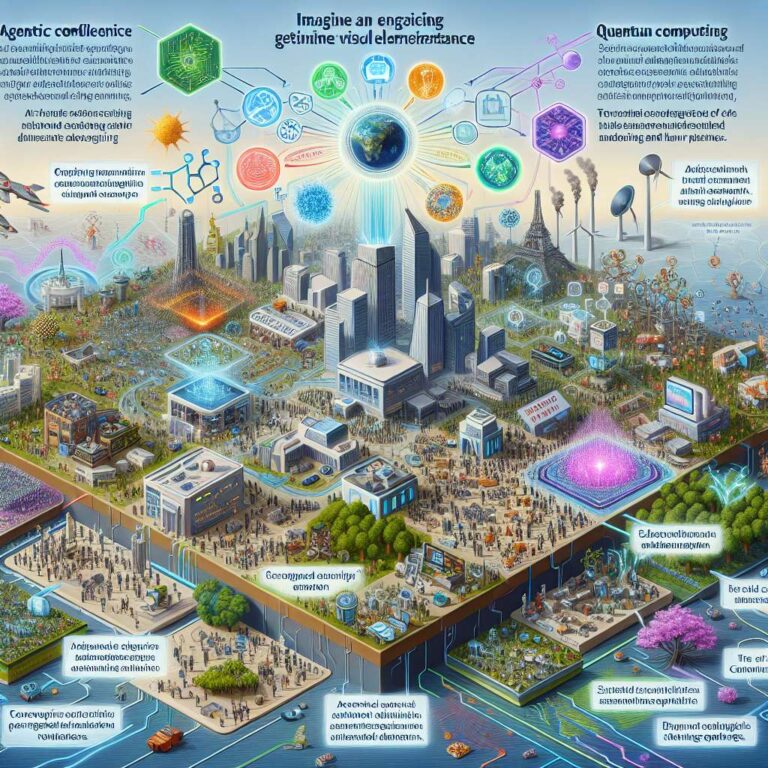
In 2025, three interlocking technology trends are reshaping industries: Artificial Intelligence moving toward agentic systems, quantum computing making measurable progress, and sustainable technologies gaining market momentum. McKinsey’s technology trends outlook and Reuters coverage frame these developments as foundational rather than incremental, while cloud providers including Google, Amazon and Microsoft are shifting toward monetizing Artificial Intelligence infrastructure. Industry posts and reporting highlight that these shifts are prompting executives to rethink workflows, investments and competitive positioning.
Agentic Artificial Intelligence-systems that can make autonomous decisions and carry out tasks with minimal human oversight-features prominently in the coverage. X posts cited in the article describe applications from autonomous trading to automated contract negotiations, and McKinsey’s analysis emphasizes applied Artificial Intelligence as the top trend for scaling hybrid human-machine workflows from pilots to enterprise deployments. The semiconductor race that underpins these systems is acute: Nvidia’s position and market signals are discussed alongside advances from competitors such as Huawei, reflecting high stakes in chip development. At the same time, quantum computing is advancing toward practical use cases, with commentary noting potential impacts on cryptography, simulations and sectors such as drug discovery and climate modeling. Surveys and industry pieces referenced in the article place quantum close behind Artificial Intelligence on executive priority lists.
Sustainability and connectivity complete the picture. Sustainable tech appears across energy, manufacturing and materials, with examples including bio-based materials, decentralized renewables and micro-factories. Connectivity upgrades from 5G toward 6G and broader IoT expansion are expected to enable real-time edge computing and immersive AR/VR experiences, while also raising cybersecurity concerns. Investment themes identified in the reporting include AI infrastructure, digital banking and cloud monetization, with regional variations and sectoral partnerships-such as collaborations between enterprise services and digital-signature firms-noted as part of a converging media-tech and health-tech landscape. The coverage urges industry leaders to adapt strategies to an era of autonomous, eco-conscious and hyper-connected technology change.