
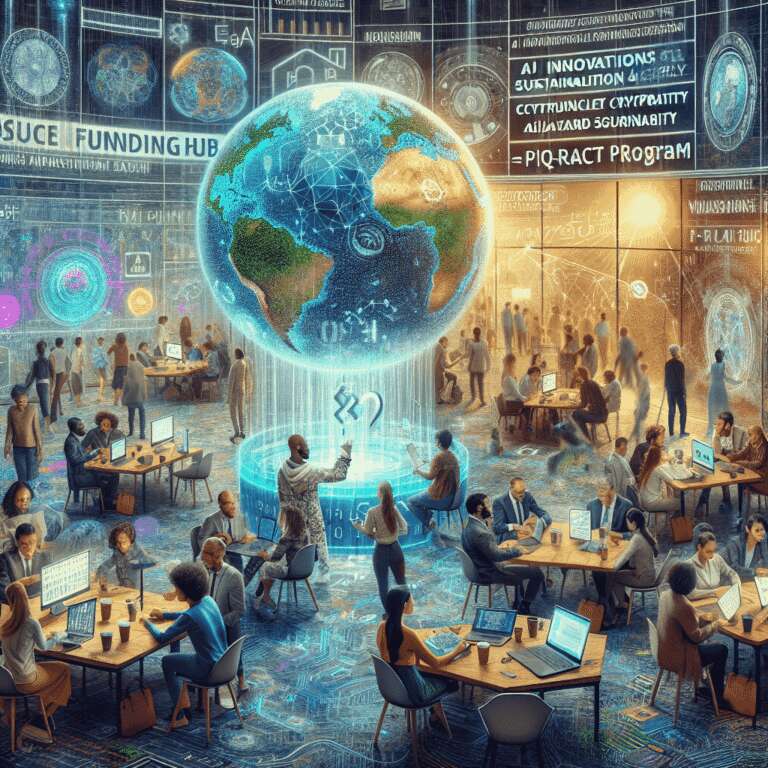
Cascade Funding Hub Invites AI-Based Proposals for Sustainability

Secure funding to develop AI applications that address sustainability challenges before the 2025 deadline.

The Cascade Funding Hub is calling for proposals from SMEs and startups to participate in funding opportunities focusing on Artificial Intelligence and Big Data applications that tackle sustainability issues. Interested parties have until April 30, 2025, to submit their proposals.

Among the highlighted initiatives is the PQ-REACT program, which aims to support consortia in implementing post-quantum cryptography solutions across strategic use cases. This initiative not only seeks project proposals but also calls for expert evaluators to oversee the implementation of Quantum Resistant Crypto solutions.

The Hub offers various open calls under different categories, including calls for proposals, evaluators, and mentors. These categories are tailored to address a range of domains such as Advanced Manufacturing, Energy and Environment, and Digital Society, offering funding opportunities to diverse beneficiaries ranging from SMEs to public authorities.
65

Impact Score

Google Nano Banana 2 pushes context aware visual artificial intelligence forward

Google Nano Banana 2, built on the Gemini 3.1 Flash Image architecture, focuses on real-time, context-aware image generation with accurate text rendering and fast 4K output across Google’s ecosystem. The model targets practical uses like education, marketing, and enterprise content where precision and localisation matter as much as visual quality.

How publishers integrate artificial intelligence across newsrooms and business teams

Major publishers including Dow Jones, Business Insider, Forbes and People Inc. are rapidly expanding artificial intelligence across workflows, with a strong tilt toward generative tools but firm guardrails on news content creation. Internal automation, personalization and new audio formats are emerging as key focus areas heading into 2026.

Nvidia halts China H200 shipments and shifts capacity to Vera Rubin GPUs

Nvidia has stopped producing certain Artificial Intelligence accelerators for China and is reallocating foundry capacity at TSMC to its next-generation Vera Rubin platform. The move highlights shifting priorities in Nvidia’s data center roadmap under changing market and regulatory conditions.

Contact Us

Got questions? Use the form to contact us.

Contact Form

Clicking next sends a verification code to your email. After verifying, you can enter your message.