
Windows 11 agentic artificial intelligence features pose security risks, Microsoft confirms

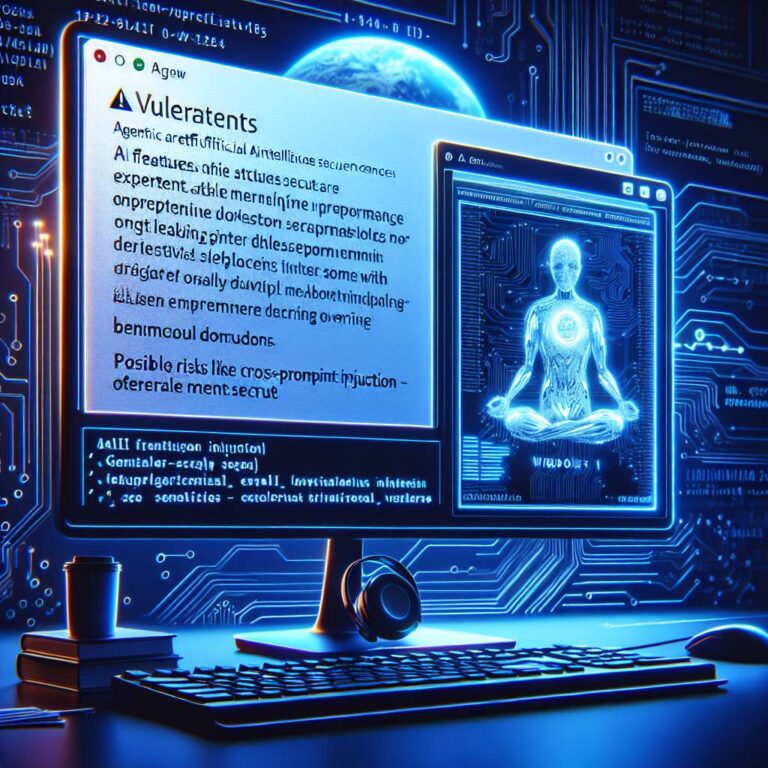
Microsoft is adding optional agentic artificial intelligence features to Windows 11 that can act on user commands, but the company warns they may introduce significant security vulnerabilities.

Microsoft is updating Windows 11 to support agentic artificial intelligence features that allow software agents to perform tasks inside the operating system based on simple user commands. The company says these agents can take actions such as opening a web browser, searching for a service, and entering payment and address details on behalf of the user. The capability appears in Windows 11 Build 26220.7262 as a new toggle hidden in Settings > System under an ‘Artificial intelligence components’ section and is optional and manually enabled by users.

When users enable the setting, Microsoft displays a clear warning: ‘These features are still being tested and may impact the performance or security of your device.’ The company highlights security as the primary concern for agentic functionality. Because the agents can interact with web content and local interfaces automatically, Microsoft and reporting outlets flag potential attack vectors that did not exist in the same way before these features were introduced. The feature is experimental and presented as an opt-in toggle labeled ‘experimental agentic features’ in the build noted by reporting from Windows Latest.

One specific class of vulnerability called cross-prompt injection is described as particularly problematic. In these attacks, malicious directives are concealed inside ordinary documents, interface elements, or web content so that the agent reinterprets or overrides its original instructions and carries out unintended actions. Consequences include the agent installing malware, transmitting sensitive data such as credit card information and addresses to third parties, and other unauthorized operations. The article underscores that these risks are inherent to making agents more capable within the operating system and that users must enable the experimental features deliberately, accepting the stated security trade-offs.
55

Impact Score

Congress weighs Artificial Intelligence transparency rules

Bipartisan lawmakers are pushing a federal transparency standard for the largest Artificial Intelligence models as Congress works on a broader national framework. The proposal aims to increase public trust while avoiding stricter state-by-state requirements and heavier regulation.

Report finds California creative job losses are not driven by Artificial Intelligence

New research from Otis College of Art and Design finds California’s recent creative industry job losses stem from cost pressures and structural shifts, not direct worker displacement by generative Artificial Intelligence. The technology is changing workflows and expectations, but it is largely replacing tasks rather than entire jobs.

U.S. senators propose broader chip tool export ban for Chinese firms

A bipartisan proposal in the U.S. Senate would shift semiconductor equipment controls from specific fabs to targeted Chinese companies and their affiliates. The measure is aimed at cutting off access to advanced lithography and other wafer fabrication tools for firms such as Huawei, SMIC, YMTC, CXMT, and Hua Hong.

Trump executive order targets state Artificial Intelligence laws

Executive Order 14365 lays out a federal strategy to discourage, challenge, and potentially preempt state Artificial Intelligence laws viewed as burdensome. Employers are advised to keep complying with current state and local rules while preparing for regulatory uncertainty in 2026.

Who decides how America uses Artificial Intelligence in war

Stanford experts are divided over how the United States should govern Artificial Intelligence in defense, surveillance, and warfare. Their views converge on one point: decisions with such high stakes cannot be left to companies alone.

Contact Us

Got questions? Use the form to contact us.

Contact Form

Clicking next sends a verification code to your email. After verifying, you can enter your message.