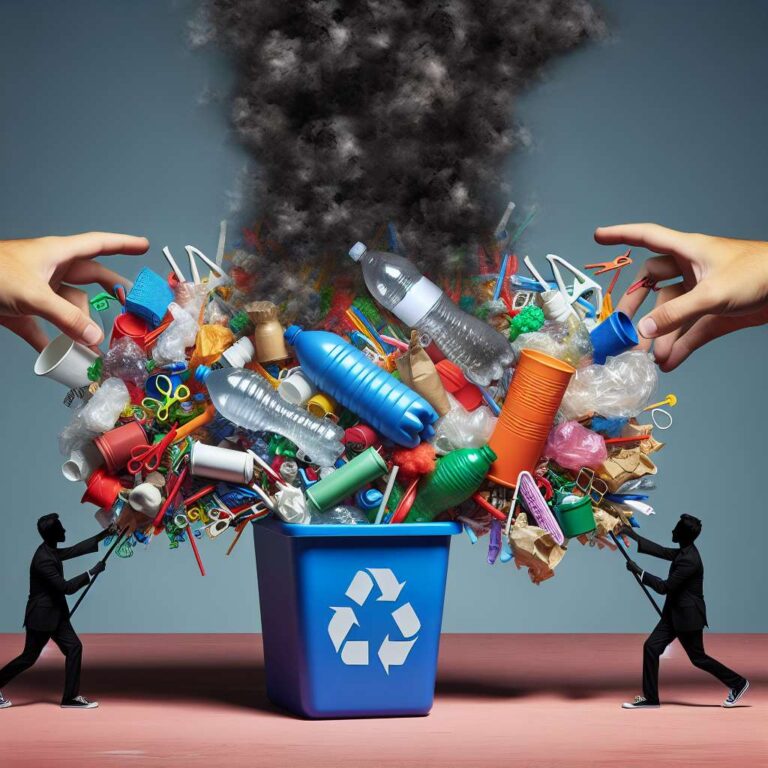
The author begins with a personal memory of a childhood princess toothbrush to illustrate how long-lived plastic persists in landfills and the environment. Recent United Nations talks to draft a binding global treaty on plastic pollution broke down when negotiators could not agree on the scope of measures. The article frames plastic not only as a widespread pollutant but also as a growing contributor to greenhouse gas emissions, and it examines why focusing only on recycling will not solve those climate impacts.
Production of plastic has expanded rapidly, rising an average of 9% per year since 1950 and reaching 460 million metric tons in 2019. Each year an estimated 52 million metric tons of plastic are dumped into the environment or burned. In March 2022 the UN Environment Assembly launched efforts to draft a treaty to address plastic pollution, but debates emerged over whether the treaty should cover the full life cycle of plastics, including limits on production and even bans on single-use items.
Petroleum-producing nations resisted production limits. Representatives from Saudi Arabia and Kuwait said such limits were outside the talks’ scope, and the United States reportedly slowed negotiations and proposed removing references to the full life cycle. The article highlights the economic and emissions stakes: oil, natural gas, and coal are used both as fuels and as raw materials for plastic. The piece cites a surprising stat that 12% of global oil demand and over 8% of natural gas demand go to plastic production.
Most greenhouse gas emissions associated with plastics arise during production. A Lawrence Berkeley National Lab report found plastics production generated 2.24 billion metric tons of carbon dioxide in 2019, about 5% of the global total. The Organisation for Economic Co-operation and Development projects emissions from plastics could grow from roughly 2 billion metric tons to 4 billion metric tons by 2060. Recycling is valuable and innovation could improve recovery, but the author argues that end-of-life solutions alone will not address the bulk of emissions.
The article calls for reducing plastic production and developing new production methods that do not rely on oil and gas. It notes that less than 10% of all produced plastic has ever been recycled and that the greenhouse gases emitted to make plastic remain in the atmosphere. Officials say the treaty talks are on hold rather than dead, and there will be efforts to revive negotiations to tackle both pollution and climate impacts.