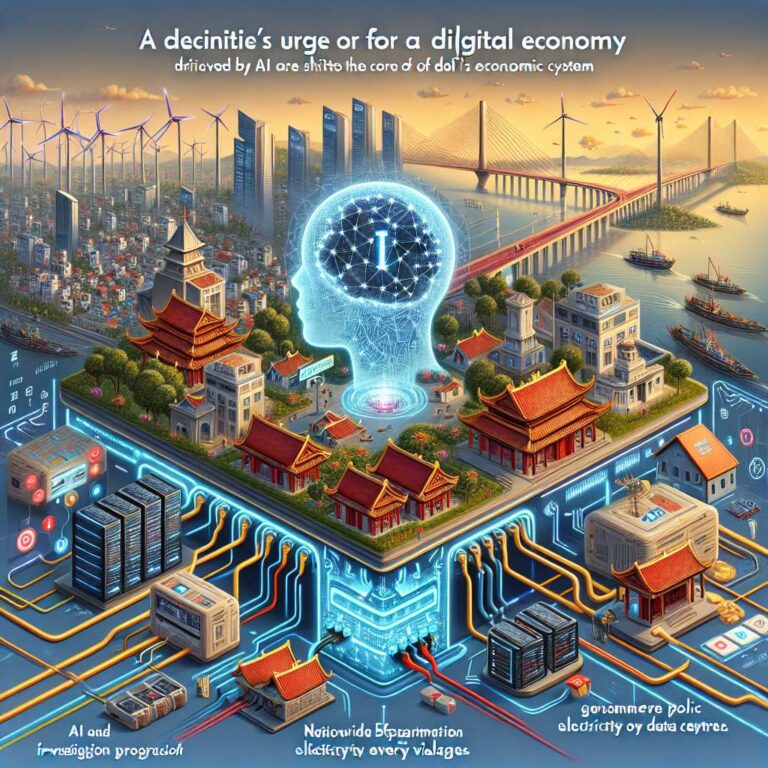
Prime minister Pham Minh Chinh called for a decisive breakthrough in Vietnam’s digital economy with the data economy and artificial intelligence serving as new, smarter and more sustainable pillars of growth. Speaking as head of the government’s steering committee on science and technology development, innovation, digital transformation and Project 06, he warned that many tasks under existing programmes remain behind schedule, particularly from 2025, and that digital infrastructure and governance are lagging behind the country’s economic potential. He highlighted slow development and integration of national and sectoral databases, noting that 45 databases have yet to connect to the National Data Centre and four key databases are still incomplete, while cybersecurity, data safety and data governance mechanisms remain inadequate and coordination among ministries, sectors and localities needs improvement.
Chinh framed 2026 as the first year of implementing the Resolution of the 14th National Party Congress and urged ministries, sectors and localities to quickly build detailed programmes and roadmaps aligned with their mandates and party leadership. He called for a fundamental shift in governance mindset from task-based management to results-based administration, where performance is measured by tangible outputs and the satisfaction of citizens and businesses. Data must be treated as a strategic resource and core foundation for a digital economic breakthrough, with the data economy at its centre, backed by efficient resource mobilisation, strict discipline and robust cybersecurity safeguards. He also stressed a transition from passive administration to proactive development and service-oriented governance to ensure that digital transformation delivers real socio-economic benefits.
The prime minister demanded the prompt completion of breakthrough institutions and policy mechanisms, particularly around the data economy and artificial intelligence, and tasked the Ministry of Science and Technology, the Ministry of Public Security and the Ministry of Industry and Trade with urgently drafting and submitting guiding documents for the implementation of the Laws on Digital Transformation, Artificial Intelligence, Cybersecurity and E-Commerce so that these regulations are promulgated and take effect in sync with the respective laws. He underscored the need for mechanisms on data valuation and data exchange, acceleration of key national databases, and operationalising the National Data Centre No. 1, alongside expanding nationwide 5G coverage and ensuring no village lacks electricity. A national artificial intelligence human resources development programme must be submitted in April, while at least 3% of annual state budget expenditure must be allocated to digital transformation. Expressing confidence in the political system, business community and citizens, Chinh said a data-driven, self-reliant artificial intelligence powered digital economy will achieve comprehensive and sustainable breakthroughs that drive rapid and lasting socio-economic development and improve the well-being of the Vietnamese people.