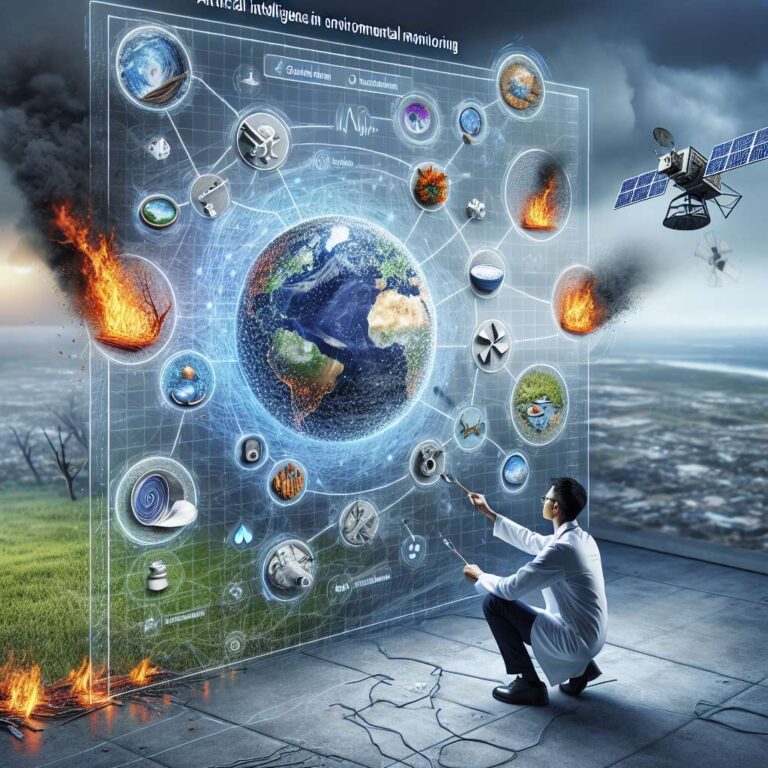
As climate volatility and industrial pollution intensify, a new peer-reviewed study positions Artificial Intelligence as a cornerstone for modernizing environmental oversight. Bamise Israel Egbewole, a research scientist at Virginia Tech University, co-authored “Artificial Intelligence in Environmental Monitoring: Advancements, Challenges, and Future Directions,” published in Hygiene and Environmental Health Advances in 2024. The paper argues that machine learning systems can transform how agencies detect pollution, forecast disasters, and track vital resources such as air and water, offering a practical roadmap for integrating data-driven tools into global policy and operations.
Egbewole, a Nigerian-born chemist based in Shelby, North Carolina, brings an analytical and organic chemistry background, hands-on expertise with instruments such as NMR, UV-Vis, and HPLC, and experience in GLP and GMP environments. This interdisciplinary grounding, coupled with prior work on nanomaterials and biomedical probes, informs the team’s examination of model classes including Convolutional Neural Networks, Support Vector Machines, and hybrid approaches. The authors detail how these models enable real-time analysis from satellites, distributed sensors, and weather systems, addressing the limits of traditional monitoring such as manual sampling, time delays, high costs, and human error.
The study outlines concrete benefits for the United States, where wildfires, hurricanes, and urban air pollution demand faster insight and stronger enforcement. Artificial Intelligence platforms can expedite early warnings, support smarter infrastructure planning, and strengthen regulatory actions by continuously parsing multi-source data for emergency responders, urban planners, and environmental agencies. The authors also emphasize economic advantages, including reduced labor costs, streamlined data processing, and predictive maintenance for public health and environmental systems. These efficiencies are particularly valuable in rural and underserved communities that lack comprehensive monitoring resources.
Looking globally, the authors see an opportunity for developing nations to leapfrog legacy constraints with data-centric systems, while warning that progress depends on responsible data governance, privacy protections, and equitable access to technology. They call for international collaboration and policy frameworks to prevent the technology from deepening disparities. In conclusion, the paper frames Artificial Intelligence as a scalable path to resilience, and Egbewole’s contribution underscores how cross-disciplinary science can bridge environmental needs with advanced computation to create smarter, more responsive monitoring systems.