
US pursues AGI while China targets practical Artificial Intelligence, says Eric Schmidt

Eric Schmidt says the US and China are taking different paths in Artificial Intelligence, with Silicon Valley chasing artificial general intelligence and China prioritizing practical deployment.

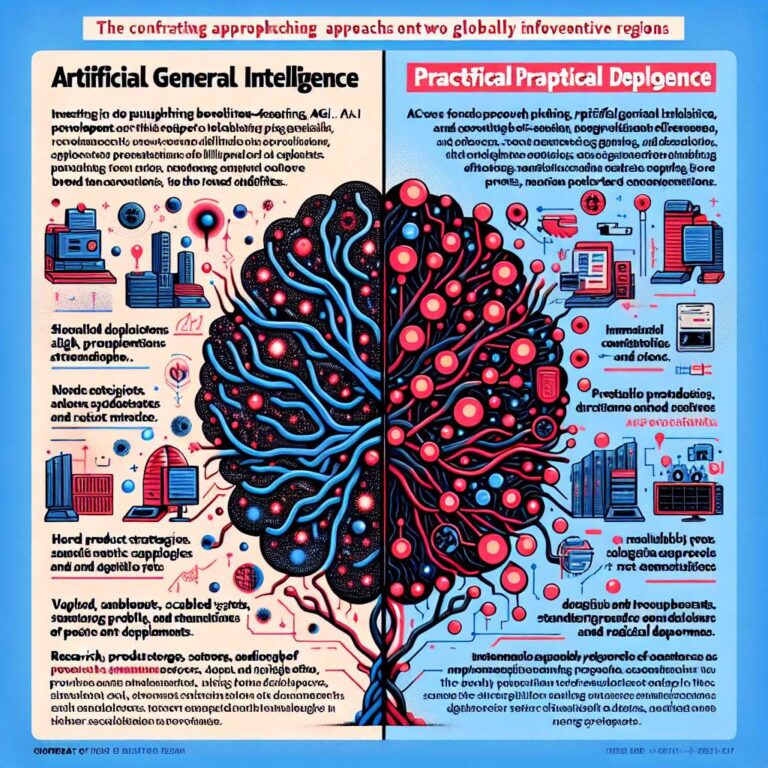
Eric Schmidt, the former CEO of Google, highlights a fundamental split in how the world’s two leading powers approach Artificial Intelligence. Framed as a “G2” Artificial Intelligence race, the article presents a clear contrast: the United States, particularly Silicon Valley, is concentrating on achieving artificial general intelligence, while China is emphasizing practical deployment. The framing underscores that the rivalry is not only about speed, but also about the targets each side is aiming to hit.

According to the piece, Silicon Valley’s efforts are directed toward the creation of artificial general intelligence, signaling a push for broad, general-purpose systems that can demonstrate capabilities beyond narrow, task-bound applications. By contrast, China’s focus on practical deployment points to a path in which near-term, usable outcomes are put first, suggesting that the measure of progress is how rapidly systems can be applied and integrated into real-world use. The juxtaposition places ambition on one side and immediate utility on the other, offering a lens to understand why each ecosystem may prioritize different milestones and assess success differently.

The article situates Schmidt’s observation as a way to interpret how priorities guide research direction, product strategies, and expectations around results. By aligning the United States with artificial general intelligence and China with practical rollout, the narrative implies that the two camps may set divergent benchmarks, timelines, and definitions of what constitutes meaningful advancement in Artificial Intelligence. It also signals how industry perspectives, such as those from Silicon Valley leaders, shape the broader conversation about where the field is headed. In short, the piece captures a strategic divergence: the US is channeling energy into artificial general intelligence breakthroughs, while China is concentrating on getting Artificial Intelligence working in practical settings.
65

Impact Score

Why DeepSeek v4 matters

DeepSeek’s new open-source flagship pairs stronger performance with a much longer context window and early support for domestic Chinese chips. The release signals progress in open models, memory efficiency, and China’s push to reduce reliance on Nvidia.

OpenAI launches workspace agents in ChatGPT

OpenAI has introduced workspace agents in ChatGPT, giving teams shared Codex-powered agents that can handle multi-step work across business tools and Slack. The feature is aimed at recurring organizational workflows with admin controls, approvals, and enterprise monitoring.

Generative Artificial Intelligence in B2B sales and content creation

Generative Artificial Intelligence is presented as a way to reduce inefficiencies in customer-facing sales work and the production of sales materials. The research combines literature review, survey data, and a pilot experiment to identify where gains are most practical in B2B sales environments.

ChatGPT Images adds thinking capability

OpenAI has upgraded ChatGPT Images with a new thinking mode that can search the internet, generate multiple images, and verify outputs before finalizing results. The update also improves text rendering, dense compositions, multilingual support, and style flexibility.

OpenAI launches workspace agents in ChatGPT

OpenAI has introduced workspace agents in ChatGPT, giving teams shared Codex-powered agents that can handle multi-step work across business tools and Slack. The feature is aimed at recurring organizational workflows with admin controls, approvals, and enterprise monitoring.

Contact Us

Got questions? Use the form to contact us.

Contact Form

Clicking next sends a verification code to your email. After verifying, you can enter your message.