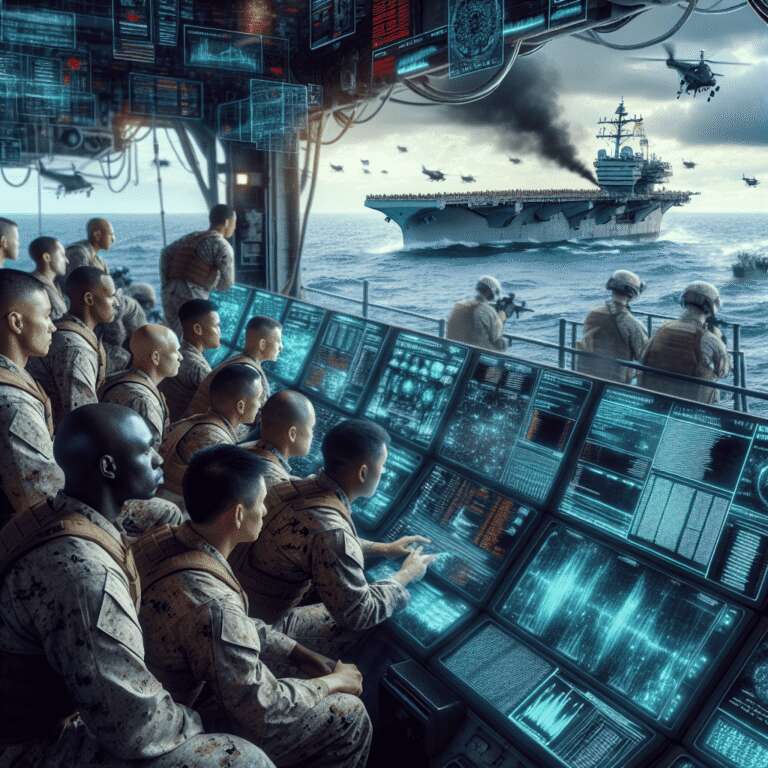
The US military has embarked on an experimental initiative to integrate generative Artificial Intelligence into its intelligence-gathering operations. The 15th Marine Expeditionary Unit, consisting of approximately 2,500 service members, was involved in this exercise as they sailed through the Pacific conducting training drills in various locations, including South Korea and the Philippines. For the first time, Marines responsible for analyzing foreign intelligence used generative AI tools to process and interpret vast amounts of open-source data. These tools, developed by defense-tech company Vannevar Labs, allowed the Marines to efficiently translate, summarize, and analyze foreign news outlets, greatly expediting the information processing pipeline that traditionally required manual efforts.
Vannevar Labs offers AI solutions that incorporate large language models capable of managing extensive data sets across 80 languages, from social media analysis to sensor data interpretation. The company, which has received substantial support from the Pentagon´s Defense Innovation Unit, leverages both existing models from major tech companies like OpenAI and in-house developed technology to enhance data processing capabilities. The goal is to enable a rapid response to dynamic threats by providing more nuanced and synthesized intelligence to military commanders.
While Vannevar´s tools proved useful during the Pacific deployment, challenges such as internet connectivity posed limitations. Furthermore, there are concerns from outside experts about the accuracy and potential biases of AI in critical military applications. Experts like Heidy Khlaaf argue that generative AI´s imperfections and susceptibility to misinformation require cautious integration. Despite these challenges, the Pentagon, backed by industry collaborations with Palantir and Microsoft, is investing further in AI applications. This ongoing development highlights a significant shift toward AI-driven decision-making, prompting debates about the balance between efficiency and reliability in military intelligence.