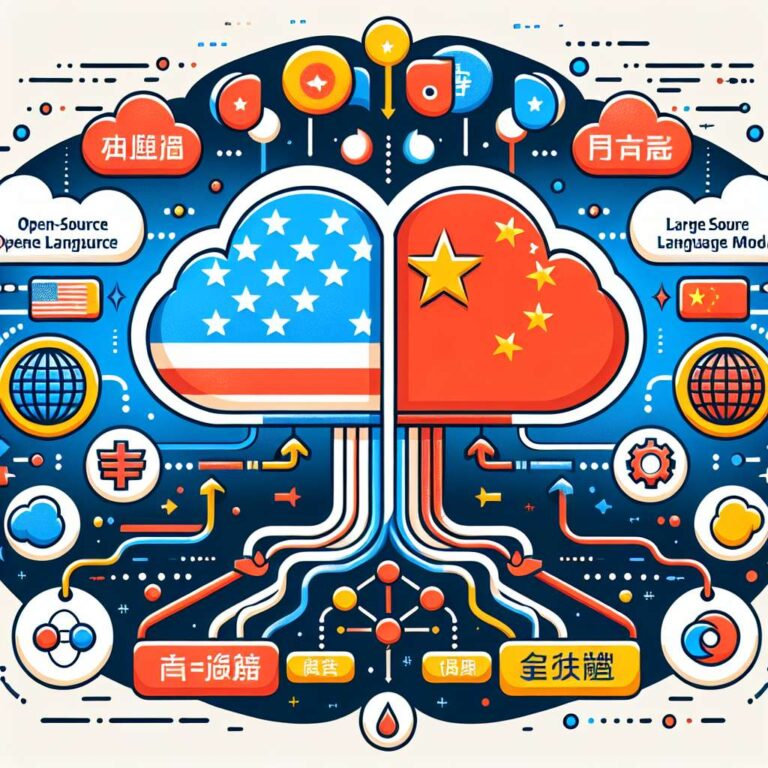
US startups and enterprise customers have accelerated adoption of Chinese open source large language models and other Artificial Intelligence offerings over the past year, according to reporting cited in the article. NBC News spoke to over 15 AI startup founders, machine-learning engineers, industry experts and investors and found that many Chinese systems are cheaper to access, more customizable and have become sufficiently capable for many uses. Popular Chinese models mentioned include DeepSeek’s R1 and Alibaba’s Qwen.
Several practitioners and founders quoted in the coverage stress how quickly the capability gap has narrowed. Misha Laskin, quoted in the article, said some Chinese models are “palpably close to the frontier.” Laskin founded Reflection AI, which the piece notes counts Nvidia as an investor and aims to provide an open-source American alternative. The article also highlights concern that investors have staked “tens of billions” on closed US systems like OpenAI and Anthropic while many US companies build products atop free Chinese models.
The article describes how Chinese open source models are often deployed on US infrastructure. Companies run models on US data center clouds, including Amazon AWS, Google Cloud, and Microsoft Axure, or on their own hardware. Michael Fine of Exa is cited saying that running Chinese models on Exa’s own hardware has proved significantly faster and less expensive than using bigger closed models such as OpenAI’s GPT-5 or Google’s Gemini in many cases. The typical workflow is to prototype with a closed model, then replace it with an equivalent open model to reduce cost and latency.
Capability benchmarks and expert commentary suggest the gap between American closed models and Chinese open models is shrinking. The article cites Artificial Analysis as tracking metrics where some Chinese products now closely approach or match leading closed American systems. It also notes shifts at large players, such as Meta moving from Llama to Meta Superintelligence models and the broader context of the US-China “Artificial Intelligence Space Race,” while advising readers that this open-source deployment trend is one to watch in the next phase of the AI tech wave.