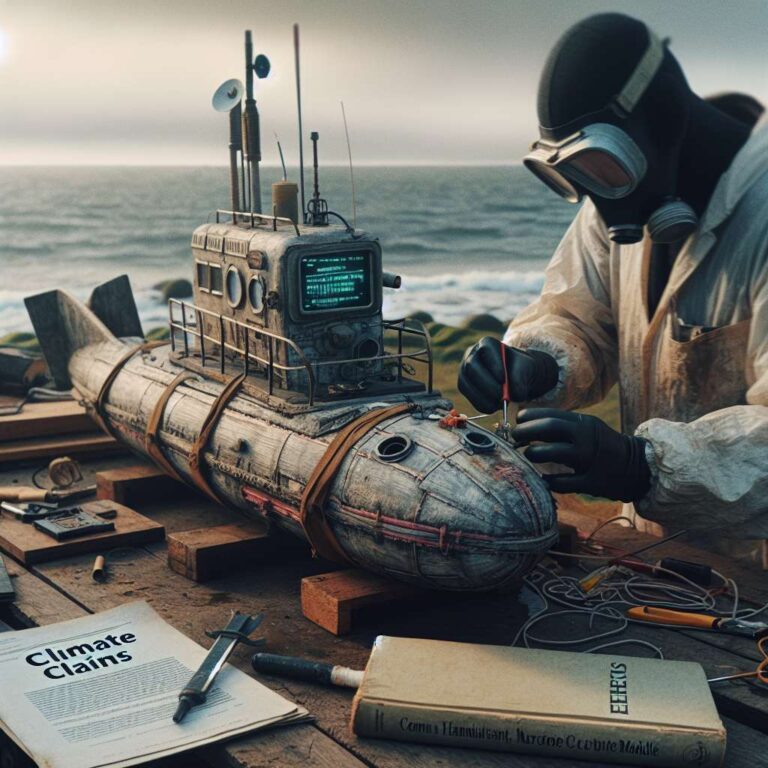
Handmade narco submarines have long been central to the cocaine trade, serving as elusive workhorses that ferry multi-ton loads from Colombian estuaries to North America and other markets. Smugglers are now incorporating off-the-shelf systems such as Starlink terminals, plug-and-play nautical autopilots, and high-resolution video cameras, which could usher in a new era of uncrewed vessels. These uncrewed subs could move more cocaine over longer distances while eliminating the risk of human couriers being captured, forcing law enforcement agencies worldwide to reconsider how they monitor and intercept maritime trafficking networks.
Alongside these developments in illicit logistics, researchers at Google DeepMind are calling for the moral behavior of large language models to face the same rigorous scrutiny currently applied to their coding and math skills. As these models increasingly act as companions, therapists, and medical advisors, and as agents begin to take actions on people’s behalf, questions around trustworthiness and influence over human decision-making are becoming urgent. The concern is that such systems may simply mimic virtue signaling rather than exhibit consistent, reliable ethical behavior, leaving users vulnerable when they rely on the technology in sensitive or high-stakes situations.
Legal and moral accountability for climate change is also under renewed examination, with growing focus on how the United States and the European Union became economic superpowers while committing what critics describe as climate atrocities. These regions have burned a wildly disproportionate share of the world’s oil and gas, creating carbon time bombs that will detonate first in the poorest and hottest parts of the globe. While the moral case for compensation by responsible countries or companies is described as ironclad, building a legal case has historically been far more challenging, although recent shifts suggest the tides may be turning in favor of global climate justice and formal redress.
Beyond these core stories, policymakers in the United States are developing an online portal, freedom.gov, intended to provide access to content banned in other countries as a response to global censorship. In the social media sector, Mark Zuckerberg reportedly overruled internal wellbeing experts to keep beauty filters on Instagram in the name of free expression, even as Meta faces criticism for failing to protect children from predators. At the same time, Silicon Valley firms are working on a shadow power grid of private plants to meet the energy demands of data centers that support generative Artificial Intelligence, and technology leaders are debating whether the current surge in Artificial Intelligence investment reflects a growing bubble.
Other notable developments span the broader technology and culture landscape, including Russian forces struggling with communication as Starlink and Telegram restrictions bite, and Bill Gates withdrawing from speaking at India’s Artificial Intelligence summit amid controversy over his past associations. E-commerce giant eBay has acquired clothing resale platform Depop in a bid to capture younger Gen Z shoppers. In parallel, scientists are revising assumptions about how crowded and dynamic the interior of cells really is, app developers are questioning the value of topping app store charts, and sleep research suggests some people may function well on as little as four hours of rest. Emerging ethical debates also extend into healthcare, where bioethicists such as David Wendler are exploring whether artificial intelligence-based tools could help surrogates make end-of-life decisions that better align with patient wishes, even as critics question whether life-or-death choices should ever be assisted by Artificial Intelligence.