
UK Delays Artificial Intelligence Regulation Amid Pressure from US and EU Models

The UK has put the brakes on Artificial Intelligence regulation, navigating between the US´s tech-driven approach and the EU´s strict oversight.

The United Kingdom has chosen to delay comprehensive regulation of Artificial Intelligence, reflecting governmental caution as it faces mounting pressure from both technology industry advocates and public interest groups. The pause comes at a crucial time when countries worldwide are grappling with the challenges and opportunities presented by rapidly advancing Artificial Intelligence technologies, and the need to balance innovation with safety and ethical guidelines grows increasingly urgent.

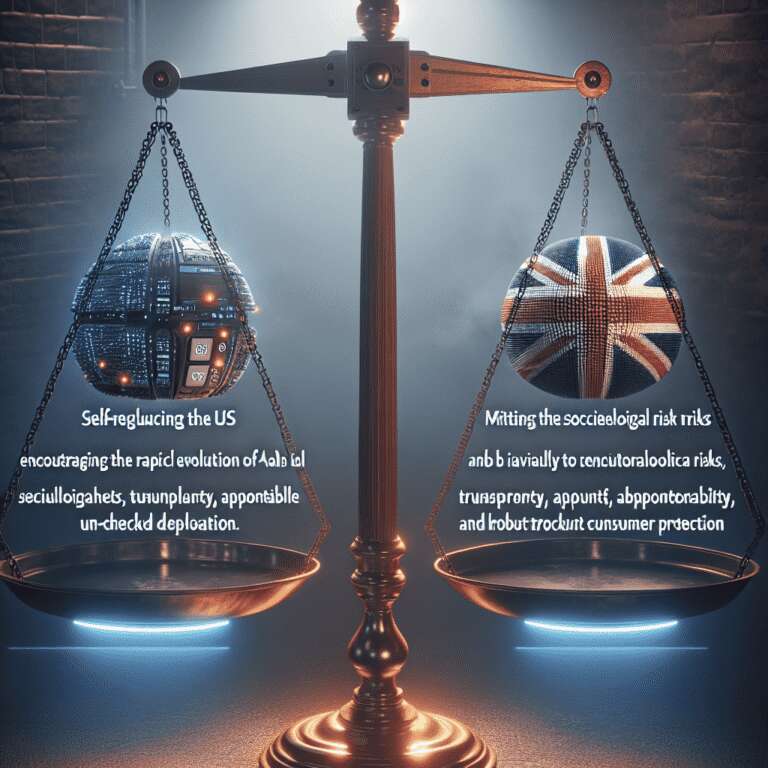
This strategic decision places the UK on a regulatory ´fence,´ caught between the lighter, industry-led regulatory strategies favored in the United States and the more stringent, risk-based regulatory frameworks adopted by the European Union. The EU has taken a leadership role in Artificial Intelligence oversight with initiatives such as the AI Act, designed to set global standards for transparency, accountability, and consumer protection. By contrast, the US has generally favored voluntary compliance and innovation-friendly guidelines, leaving significant space for self-regulation within the tech sector. The UK´s current posture, therefore, reflects both an economic desire to foster a competitive Artificial Intelligence industry and a political need to address societal and ethical concerns.

As the government considers its next steps, the discourse in the UK is notably polarized. Advocates for strict rules warn about ethical pitfalls, bias, and social impact, urging that robust guardrails are essential to mitigate risks from powerful algorithms. Meanwhile, industry leaders and proponents of innovation caution that excessive regulation could stifle growth and erode the UK´s competitive edge in the global Artificial Intelligence race. The government´s indecision highlights how Artificial Intelligence regulation is becoming a defining challenge for modern governance, with potential ramifications for privacy, employment, national security, and international competitiveness. Observers anticipate that the UK´s stance will remain under intense scrutiny as global regulatory trends and technology advances continue to evolve.
74

Impact Score

What businesses need to know about the EU cyber resilience act

The EU cyber resilience act is turning product cybersecurity into a legal requirement for companies that sell digital products into the European Union. A key compliance milestone arrives in September 2026, well before the full regulation takes effect in 2027.

Claude Mythos and cyber insurance’s next inflection point

Claude Mythos is being treated by governments and regulators as a potential systemic cyber risk with implications for financial stability and insurance markets. Its emergence is intensifying pressure on insurers to clarify whether Artificial Intelligence-enabled cyber losses are covered, excluded, or require new stand-alone products.

OpenAI expands ChatGPT ads with self-serve manager

OpenAI is widening its ChatGPT ads pilot with a beta self-serve Ads Manager, new bidding options and broader measurement tools. The push signals a deeper move into advertising as the company expands the program into several international markets.

OpenAI launches Artificial Intelligence deployment consulting unit

OpenAI has created a new consulting and deployment business aimed at helping enterprises build and roll out Artificial Intelligence systems. The move mirrors a similar push by Anthropic and signals a broader effort by model providers to capture more of the enterprise services market.

SK Group warns DRAM shortages could curb memory use

SK Group chairman Chey Tae-won warned that customers may reduce memory consumption through infrastructure and software optimization if DRAM suppliers fail to raise output. Demand from Artificial Intelligence data centers is keeping the market tight as memory makers weigh expansion against the long timelines for new fabs.

Contact Us

Got questions? Use the form to contact us.

Contact Form

Clicking next sends a verification code to your email. After verifying, you can enter your message.