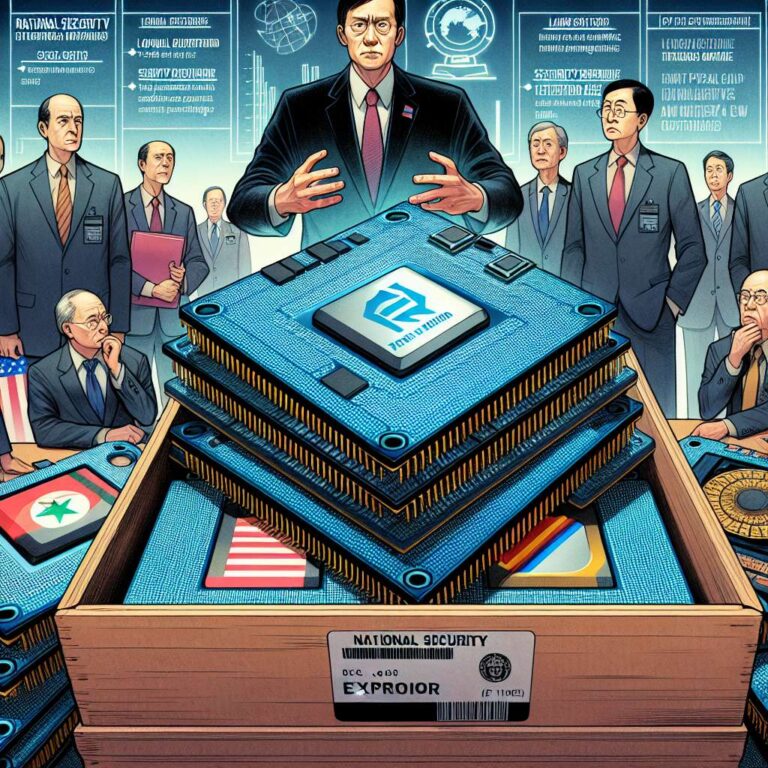
U.S. lawmakers and former national security officials are criticizing President Donald Trump’s decision to allow Nvidia to sell its second most powerful artificial intelligence chips to Chinese customers, arguing that the move could undercut Washington’s strategic leverage over Beijing. The approval follows years of tightening restrictions on advanced semiconductor exports to China, which were justified by concerns that cutting edge chips could be diverted for military use or to strengthen China’s surveillance state. Critics say that even though the Nvidia chips in question are not the company’s top tier products, they are still powerful enough to significantly accelerate artificial intelligence research and applications inside China.
According to these lawmakers and former officials, the decision comes at a sensitive moment in the broader technology rivalry between the United States and China, where semiconductors and artificial intelligence systems are seen as core to future economic and military power. They warn that allowing Nvidia to ship its second most powerful artificial intelligence chips risks sending mixed signals to allies and competitors about the firmness of U.S. export control policy, after previous rules were presented as essential to national security. Some critics also contend that Beijing could interpret the greenlight as a sign that Washington is willing to trade long term strategic advantages for short term commercial gains for U.S. chipmakers.
The critics argue that the Biden administration will face added pressure to clarify or potentially revisit the scope of semiconductor export controls that were previously announced, since the Trump approval on Nvidia chips could open the door to further exemptions. They also raise questions about how U.S. regulators intend to distinguish between different performance tiers of artificial intelligence chips in practice, and whether such distinctions are sufficient to prevent Chinese entities from building powerful artificial intelligence systems by clustering large numbers of slightly less capable chips. Supporters of tougher controls say the episode illustrates the difficulty of balancing U.S. economic interests with security concerns in the rapidly evolving artificial intelligence and semiconductor sectors.