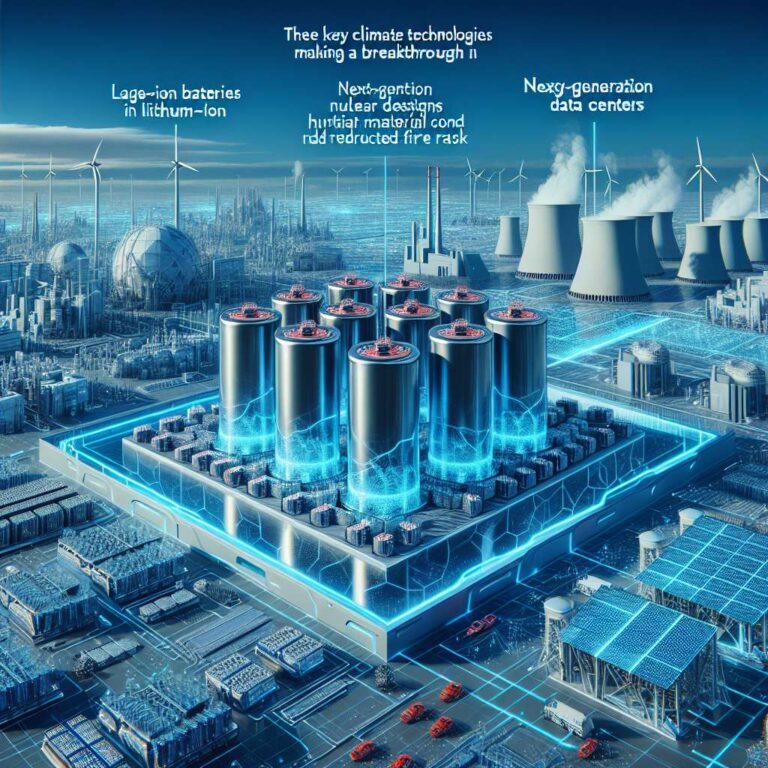
MIT Technology Review’s latest edition of its 10 Breakthrough Technologies list marks the 25th year of the package, and the 2026 lineup underscores how climate and energy innovations are colliding with broader shifts in technology. Alongside splashy picks like gene resurrection and commercial space stations, the list features sodium-ion batteries, next-generation nuclear reactors, and hyperscale artificial intelligence data centers as three technologies that define the current moment for climate tech. The newsletter frames these selections as indicative of both potential climate solutions and emerging sources of pressure on energy systems.
Sodium-ion batteries are presented as a long-anticipated alternative to lithium-ion technology that is finally entering a breakout phase. Today, lithium-ion cells power everything from EVs, phones, and computers to huge stationary storage arrays that help support the grid, but concerns about lithium’s relative scarcity and volatile price have fueled a search for options. Sodium-ion batteries could step in because sodium is much more abundant than lithium, potentially enabling cheaper batteries with a lower fire risk, although they will not match lithium cells on energy density. Those trade-offs may be acceptable for uses like grid storage and smaller EVs, and growing commercial interest, especially from Chinese companies, is now translating into real deployment, with CATL saying it started manufacturing these batteries at scale in 2025.
Next-generation nuclear reactors appear as another key climate-related technology, aimed at overcoming the financial and logistical barriers that have stalled traditional nuclear expansion. Existing large reactors supply steady, reliable electricity, but new projects have often been massive, costly, and prone to delays, which has limited additions in countries with mature fleets. New designs seek to break out of that pattern through smaller reactors that could be easier to finance and finish on schedule, as well as alternative fuels and coolants that carry heat from the reactor core more efficiently and safely. The article notes that Kairos Power was the first US company to receive approval to begin construction on a next-generation reactor to produce electricity, while China’s national nuclear company is reportedly working on several next-gen reactors, signaling growing global momentum.
The third highlighted technology, hyperscale data centers, is positioned as less of a traditional climate solution and more as a crucial, energy-intensive by-product of the artificial intelligence boom. The author, who spent much of the previous year reporting on the climate and environmental impacts of artificial Intelligence, explains that a new wave of supersize data centers is being proposed and built to support artificial Intelligence workloads. Some of these facilities require a gigawatt or more of power, which the article describes as like the output of an entire conventional nuclear power plant, just for one data center. While these massive facilities are driving up electricity demand and provoking public pushback, they are also becoming central pieces of global infrastructure. The newsletter emphasizes that the Breakthrough Technologies list does not only highlight technologies with straightforwardly positive effects, recalling that the 2023 list included mass-market military drones, and suggests that hyperscale artificial Intelligence data centers similarly embody both promise and risk in the climate and energy landscape.