
Teledyne e2v starts production of 16 GB DDR4-X1 flight models

Teledyne e2v has begun full production of its 16 GB DDR4-X1 Flight Model for space applications. The memory device targets the rising onboard computing and storage demands of Artificial Intelligence-enabled satellites and other data-intensive space systems.

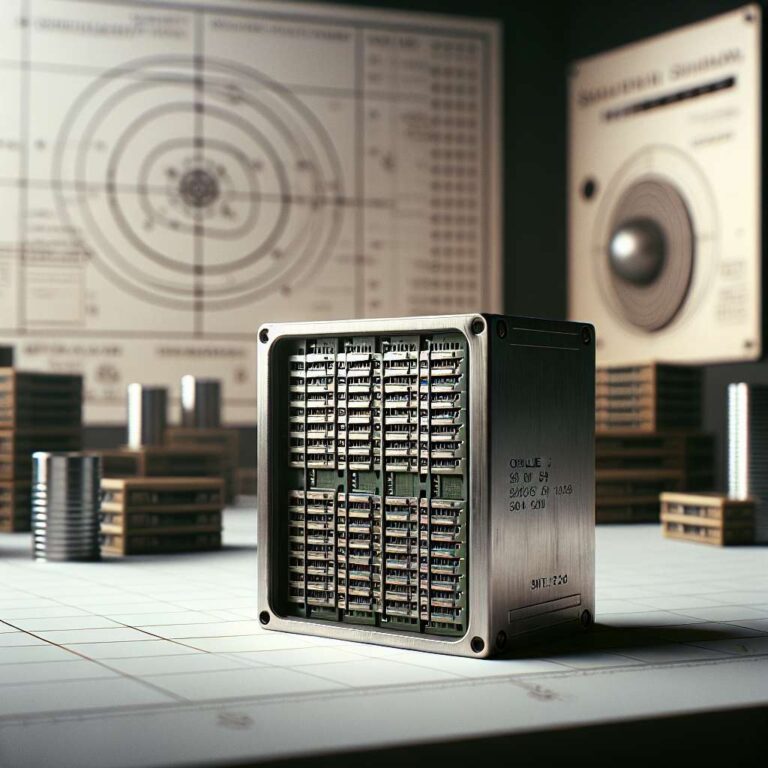
Teledyne e2v has started full production of its 16 GB DDR4-X1 Flight Model, expanding its portfolio of high-density, radiation-tolerant memory products for space applications. The component is aimed at spacecraft that need higher onboard processing and storage capacity while operating in demanding mission environments.

The new memory device is positioned for the growing requirements of Artificial Intelligence-enabled satellites, large constellations, broadband Internet-from-Space, Direct-to-Device services, and optical inter-satellite communications. By combining high memory density, radiation resilience, and a compact footprint, the component is intended to help spacecraft manage increasingly demanding onboard computing workloads.

Initial samples of the 16 GB DDR4-X1 Flight Models were delivered to customers in October 2025, allowing early system integration and evaluation. The device supports data rates up to 2400 MT/s, provides single-event latch-up immunity above 43 MeV·cm²/mg, and offers radiation tolerance up to 35 krad TID, enabling reliable operation in mission-critical space environments.
50

Impact Score

Mistral launches text-to-speech model

Mistral has expanded its Voxtral family with a text-to-speech system aimed at enterprise voice applications. The company is positioning the open-weights model as a flexible alternative for organizations that want more control over deployment, cost and customization.

UK Parliament opens workforce inquiry on Artificial Intelligence

A UK Parliament committee is examining how Artificial Intelligence is changing business and work, with a focus on both economic opportunity and labour disruption. The inquiry is seeking evidence on government priorities as adoption expands across the economy.

Windows 11 tightens kernel trust for older drivers

Microsoft is changing Windows 11 kernel policy so new drivers must be signed through the Windows Hardware Compatibility Program. Older trusted drivers will still be allowed in some cases to preserve compatibility during the transition.

Proofpoint expands security for the agentic workspace

Proofpoint introduced new email and data security capabilities designed for workplaces where humans and Artificial Intelligence agents interact across communication and data environments. The updates combine email protection models, add data access governance for human and non-human identities, and extend data security posture management into on-premises systems.

Contact Us

Got questions? Use the form to contact us.

Contact Form

Clicking next sends a verification code to your email. After verifying, you can enter your message.