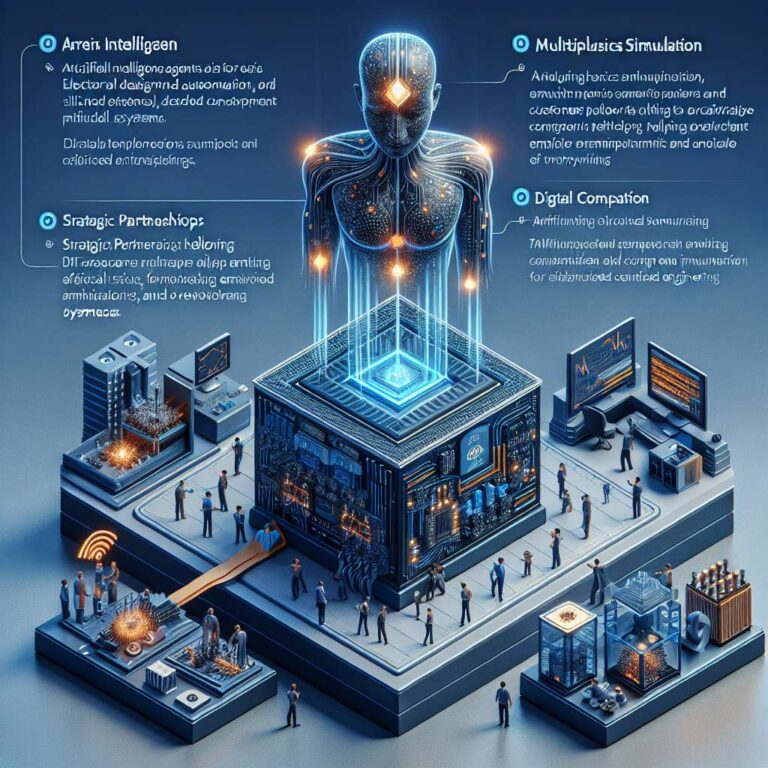
Synopsys is using 2025 and early 2026 to consolidate its position as a full stack engineering player from silicon to systems, with a roadmap that combines Artificial Intelligence driven electronic design automation, multiphysics simulation, and digital twin technologies. Across its news flow, the company emphasizes synopsys.ai for Artificial Intelligence enabled design, verification, test, and analytics, and positions agentic Artificial Intelligence and multi agent workflows as core to next generation engineering tools. The integration of Ansys following the completed acquisition, along with a new Electronics Digital Twin Platform and expanded Omniverse based collaborations, is designed to let customers explore architectures, validate earlier, and optimize complex products virtually before committing to physical builds.
Partnerships with leading compute and foundry providers underpin this strategy. A strategic agreement with Nvidia highlights a multi year collaboration spanning Nvidia CUDA accelerated computing, agentic and physical Artificial Intelligence, and Omniverse digital twins to achieve simulation speed and scale previously unattainable. Synopsys is also aligning with Samsung Foundry, TSMC, Intel Foundry, and GlobalFoundries to certify Artificial Intelligence driven flows, multi die design methodologies, and IP on advanced processes such as A16, N2P, Intel 18A, and advanced SoIC technologies, targeting performance, power, and area improvements for applications like Artificial Intelligence accelerators, high speed data communications, and automotive systems. Additional collaborations with companies such as Keysight, Vector Informatik, and university programs aim to bring practical chip design and software defined development into both industry and academia.
Financially, Synopsys is reporting steady growth while reshaping its portfolio. For the second quarter fiscal year 2025, quarterly revenue of 1.604 billion exceeded the midpoint of guidance, while subsequent results for the third quarter showed quarterly revenue of 1.740 billion, up 14% year over year. For full year 2025 the company reported record full year 2025 revenue of 7.054 billion, with fourth quarter revenue of 2.255 billion exceeding the midpoint of guidance, and later disclosed quarterly revenue of 2.409 billion for the first quarter fiscal year 2026 at the high end of prior guidance. Capital allocation steps include an accelerated share repurchase agreement to repurchase an aggregate of $250 million of stock and selective divestitures and portfolio refocusing, such as the sale of the processor IP solutions business and the planned divestitures of optical and power analysis units. Governance and leadership updates, including new board and revenue leadership appointments and regulatory communications related to export and BIS matters, round out a picture of a company aligning its structure, technology stack, and partnerships around Artificial Intelligence powered, software defined engineering workflows.