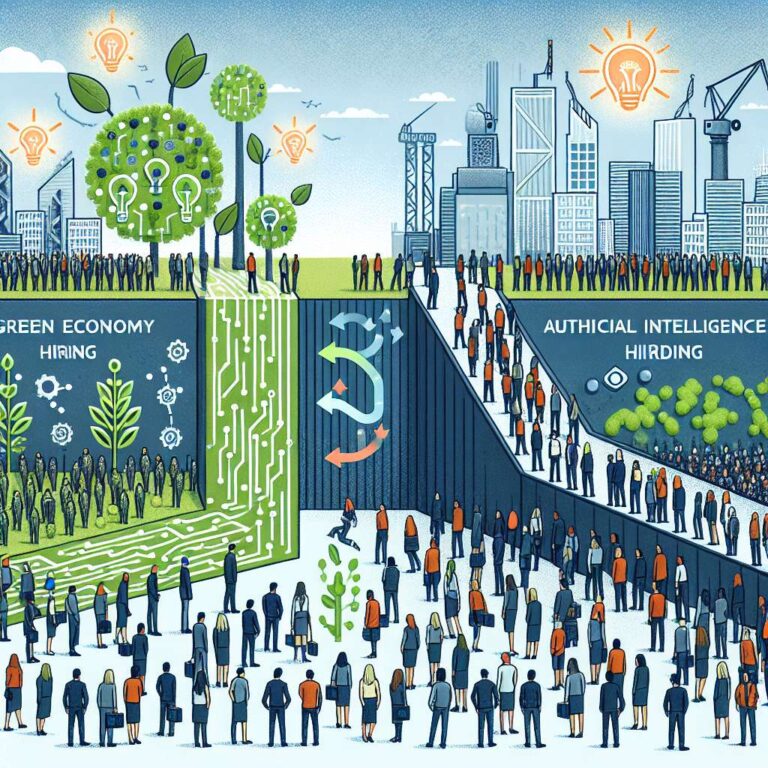
The UK labour market faces a paradox: unemployment sits at 4.4 percent and nearly 1 million young people are not in education, employment or training, yet employers in fast-growing fields struggle to hire. The green economy is expanding three times faster than the wider jobs market, but 27 percent of employers report difficulty finding qualified candidates, with the same share of jobseekers saying suitable roles are scarce. Against the backdrop of the UK’s Paris Agreement target to cut greenhouse gas emissions by 68 percent by 2030, businesses are being urged to rethink hiring so it reflects social, governance and broader environmental needs as well as climate commitments.
According to the World Economic Forum, postings requiring at least one green skill rose 15 percent between February 2022 and February 2023, yet many employers still prioritise direct experience over technical and transferable skills. The UK Parliament defines green skills broadly, but narrow interpretations can deter capable applicants who have not held ESG-focused titles. Candidates from finance, technology and healthcare often bring decision-making and problem-solving strengths that translate to sustainability roles. Indeed data indicates strong appetite among younger workers to pivot: 32 percent of those aged 25 to 34 would retrain for a green job and 42 percent would accept a pay cut to do so. Government plans for a “clean power army,” including training and apprenticeships in engineering and welding, underscore the need to widen entry pathways.
Skills-first hiring is equally critical in emerging technology sectors such as Artificial Intelligence, machine learning and 5G. Artificial Intelligence roles are growing at 3.6 times the rate of other UK jobs, and they demand a blend of technical capabilities like programming and data analysis alongside soft skills including critical thinking, creativity and communication. Employers can operationalise a skills-first model by rewriting job descriptions to specify required competencies, enabling candidates to match on skills rather than pedigree. During later hiring stages, Artificial Intelligence tools can support crafting descriptions, drafting screener questions and surfacing applicants by relevant skills. These changes help build agile, resilient teams ready for rapid industry shifts and tightening regulations such as the EU’s CSRD. Broadening the talent pool through transferable skills is presented as essential to closing shortages, accelerating innovation and meeting the UK’s net-zero ambitions.