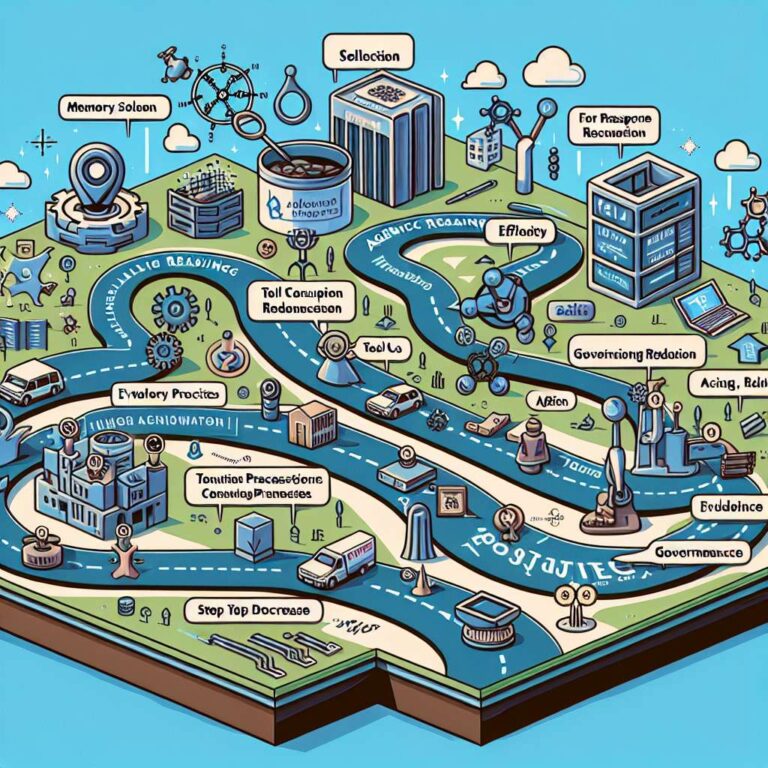
The article highlights that interest in agentic systems is rapidly increasing and argues that staying current now requires engaging with a new wave of surveys on agents and agentic reasoning. These works do not only treat agents as standalone systems, but also examine how large language models are acquiring agent-like capabilities to reason, plan, and act more effectively in real environments. The author positions the curated list as a compact roadmap for readers who want to understand today’s agentic landscape across research, engineering, and governance.
The first recommended source, titled “Agentic Reasoning for Large Language Models,” is described as a fresh survey from authors spanning institutions such as University of Illinois Urbana-Champaign, Meta, Amazon, Google DeepMind, UCSD, and Yale. It focuses on how Artificial Intelligence reasoning is shifting from purely internal “thinking” toward agents that operate in real contexts, and it outlines agent types, core skills like planning and tool use, optimization approaches, real-world deployments, and open research challenges. A companion piece, “Toward Efficient Agents: Memory, Tool learning, and Planning,” centers on cutting the real costs of Artificial Intelligence agents, including token usage, latency, and number of steps, while keeping task performance intact, breaking these concerns down into memory compression and retrieval, smarter tool use, and controlled planning, along with benchmarks and metrics for measuring efficiency.
Several other sources look at how agentic capabilities change evaluation, practice, and governance. “Agent-as-a-Judge” explains the move from basic “LLM-as-a-judge” evaluation setups to richer agent-based judges that can plan, use tools, collaborate, and verify outputs, presenting this shift as a new roadmap for robust and verifiable Artificial Intelligence evaluation. OpenAI’s “A practical guide to building agents” targets product and engineering teams, distilling lessons from real deployments on choosing use cases, designing agent workflows, and ensuring safe, reliable behavior in production. “Model AI Governance Framework for Agentic AI” examines both benefits and risks of Artificial Intelligence agents and proposes a governance structure that keeps humans meaningfully in control. Three surveys round out the list: one on agentic large language models across reasoning, tools, and multi-agent collaboration with applications in medicine, finance, and science; and another on agentic multimodal large language models that tracks how multimodal models become full agents able to plan, use tools, and act in domains like graphical user interface agents, robotics, healthcare, and autonomous driving. The piece closes by noting that Turing Post’s own guides on Artificial Intelligence agents are available to clarify each part of agentic workflows and invites readers to subscribe for ongoing coverage.