
Scientists Integrate Human Brain Cells with Microchips

A groundbreaking fusion of human brain cells and microchips promises new energy-efficient technologies mimicking biological processes.

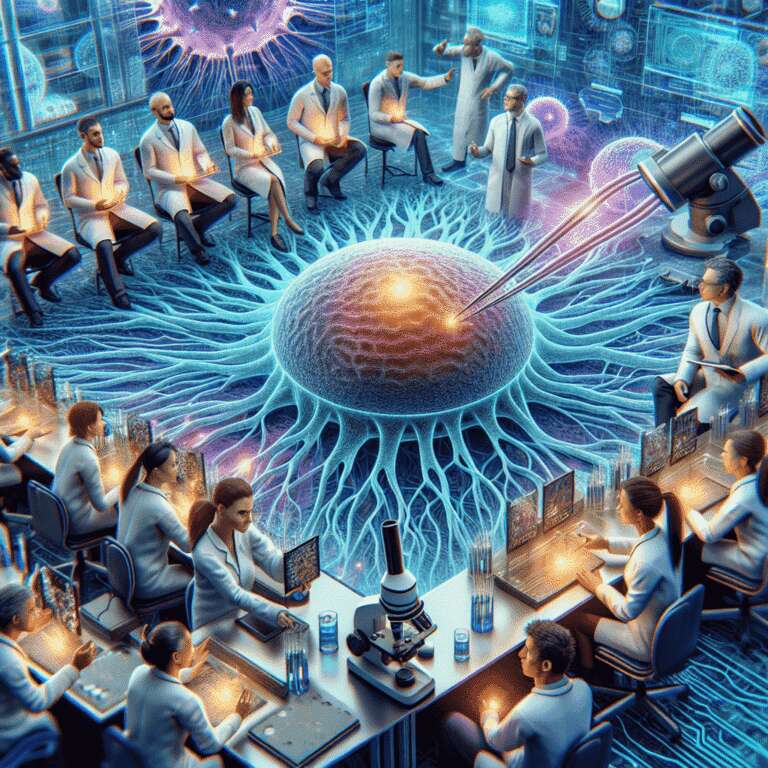
Scientists have achieved a significant breakthrough by successfully merging human brain cells with electronic microchips. This innovative fusion creates a hybrid system, combining the computational power of electronics with the complex processing ability of biological neural networks. The result potentially heralds a new era of advanced computational systems that operate with energy efficiencies previously unattainable with conventional tech approaches.

The primary advantage of this biohybrid technology is its remarkable energy efficiency. Instead of relying on traditional models that consume considerable amounts of power, these innovative systems can leverage the natural processes of human brain cells. This not only reduces the energy footprint but also opens up possibilities for designing more sustainable and environmentally friendly computing solutions.

Beyond energy considerations, the integration of human neural cells with microchips offers exciting prospects for the field of Artificial Intelligence. By embedding the biological neurons into chip technology, researchers aim to enhance machine learning models with the brain´s natural ability to adapt, learn, and process information in parallel. This advancement could lead to the development of superior artificial systems, mimicking the adaptability and learning capacity found in living organisms.
88

Impact Score

UK and EU Artificial Intelligence regulatory outlook for May 2026

The UK is moving ahead with targeted Artificial Intelligence measures in policing, online safety, cyber security and copyright policy, while the EU is refining how the EU Artificial Intelligence Act will apply in practice. Consultations, new offences and implementation deadlines are shaping the next phase of compliance on both sides.

Germany sets out national implementation of the Artificial Intelligence Act

Germany has published a draft law to implement the European Artificial Intelligence Act through new supervisory structures, clearer institutional responsibilities, and measures designed to support innovation. The proposal puts the Federal Network Agency at the center of enforcement while preserving sector-specific oversight in sensitive fields.

ECB warns banks about new Artificial Intelligence security risks

The European Central Bank has called major banks to an emergency meeting over cybersecurity risks tied to advanced Artificial Intelligence models. Regulators want banks to speed up security updates as newer tools make it easier to find and exploit vulnerabilities.

Anthropic keeps Mythos restricted after vulnerability findings

Anthropic says its cybersecurity model Mythos is powerful at uncovering software flaws but remains too risky for broad release. Early testing found large numbers of vulnerabilities across major software and open source projects, while fixes have lagged far behind discoveries.

Contact Us

Got questions? Use the form to contact us.

Contact Form

Clicking next sends a verification code to your email. After verifying, you can enter your message.