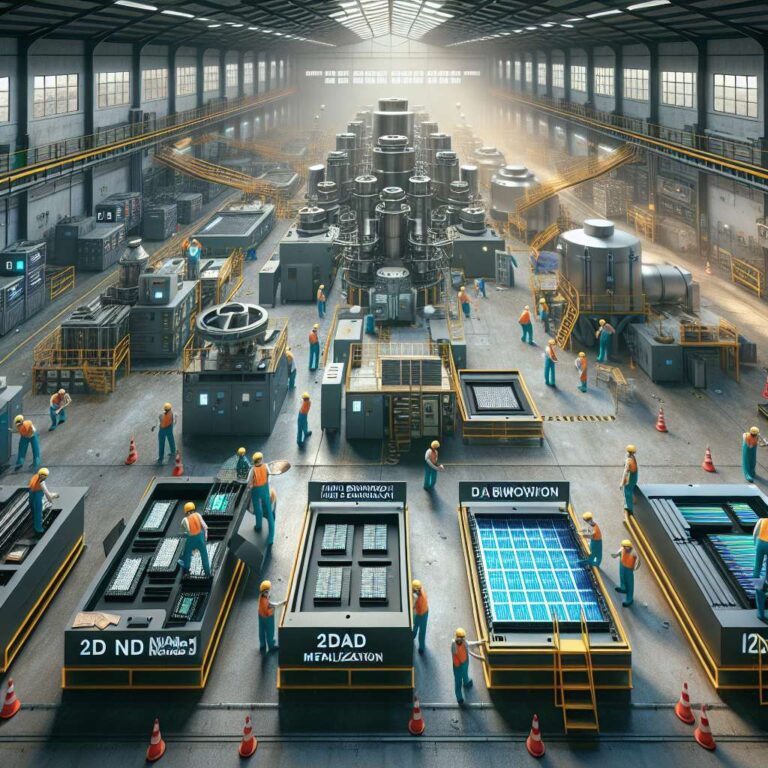
Samsung is halting production of its legacy 2D NAND flash storage this year and converting aging fabrication lines to support surging Artificial Intelligence and high bandwidth memory workloads. The company plans to officially stop 2D NAND production at its Hwaseong site, where Line 12 has been dedicated to this older technology, and will transition the facility to DRAM metallization, the stage that creates conductive pathways connecting DRAM memory cells.
Hwaseong Line 12 currently has a monthly wafer production capacity of 80,000 to 100,000 12-inch wafers, and this capacity is now allocated only to 2D NAND flash, which is being phased out as 3D NAND flash becomes the standard. Rather than leaving that capacity idle, Samsung will repurpose the tools and infrastructure to manufacture its 6th-generation 10 nm-class 1c DRAM, which is used in HBM4 products. By redirecting this existing capacity, Samsung is aiming to align its manufacturing footprint with market demand for advanced memory in data center and Artificial Intelligence applications.
Continuing the Line 12 legacy, Samsung expects the total wafer capacity for 1c DRAM to reach about 200,000 wafers per month in the second half of the year. The revamped Hwaseong line will operate alongside Pyeongtaek Line 3 and Line 4, forming a broader production network for next-generation DRAM. This strategy leverages older 2D NAND flash facilities to accelerate HBM4-related output without building entirely new fabs, reinforcing Samsung’s focus on higher value memory technologies.