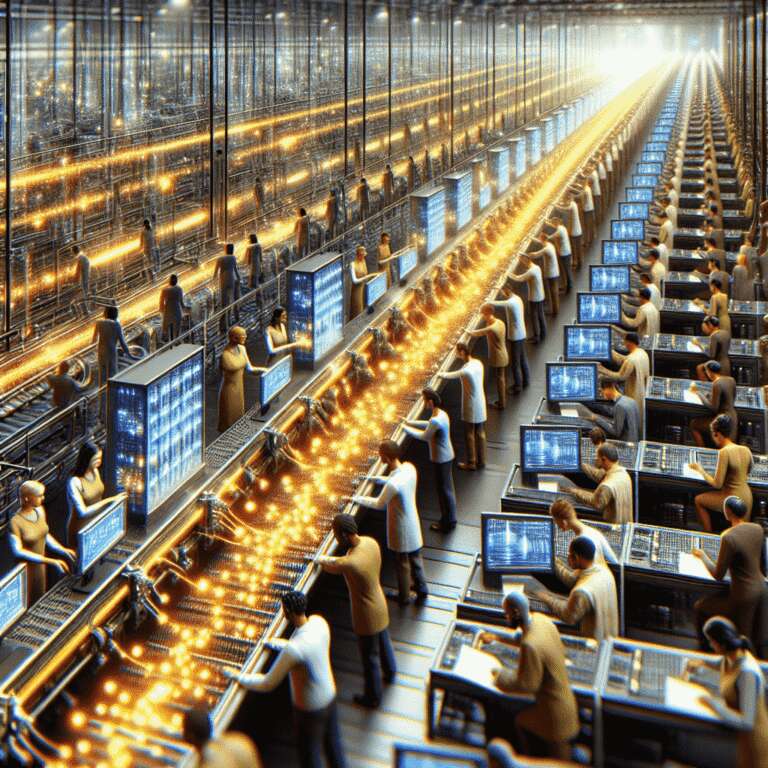
Artificial Intelligence is rapidly becoming a driving force across diverse fields, from drug discovery in healthcare to financial market analysis. The backbone of this transformative power lies in the rapid production of tokens—the fundamental units of output in modern generative models. Artificial Intelligence factories, purpose-built infrastructure optimized for turning data into tokens and other valuable results, now represent the most efficient conduit from initial data ingestion to actionable revenue.
These factories integrate three pivotal technology stacks: advanced Artificial Intelligence models, accelerated computing infrastructure, and enterprise-grade software. By focusing on high-throughput, low-latency production, Artificial Intelligence factories enable organizations to swiftly process data, train models, and deliver inference at industrial scale. Metrics like throughput (tokens per second), latency (response speed), and goodput (useful output within latency targets) are now essential benchmarks, providing a tangible way for enterprises to quantify efficiency and user experience, and ultimately to monetize their efforts more effectively by balancing cost, energy, and quality of service through concepts like the Pareto frontier.
Key to a factory´s value is its ability to optimize operational trade-offs—for example, serving the maximum number of users concurrently without sacrificing single-user responsiveness. The use of NVIDIA´s latest GPU technology, such as H100 and Blackwell B300, showcases the leap in both performance and energy efficiency, enabling factories to achieve up to 50 times higher revenue potential via superior throughput and user experience. Real-world implementations, such as Lockheed Martin´s deployment of an in-house Artificial Intelligence factory leveraging NVIDIA´s DGX SuperPOD, demonstrate practical gains: handling over a billion tokens weekly while avoiding the escalating costs and limited flexibility of off-premises, token-based fee structures.
NVIDIA´s full-stack approach provides a turnkey solution for building Artificial Intelligence factories, encompassing high-performance GPUs, high-bandwidth networking, and orchestration platforms like NVIDIA Dynamo. These validated, scalable platforms guarantee not just peak production, but also operational consistency and the capability for continuous model improvement through feedback loops and real-time inference. As a result, Artificial Intelligence factories transform patchwork experiments into consistent engines of innovation and profit, positioning enterprises to secure and maximize new revenue opportunities in the era of large-scale, data-driven intelligence.