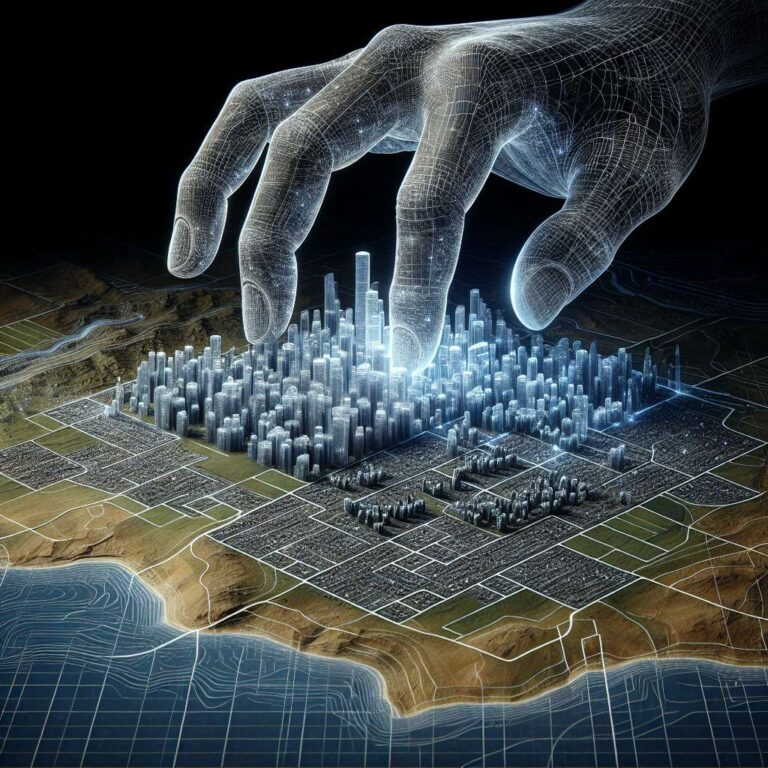
NVIDIA research is driving a convergence between graphics and Artificial Intelligence that the company describes as shaping physical intelligence. Breakthroughs in neural rendering, 3D generation and world simulation are central to that work. Together, these threads aim to close the gap between virtual models and real-world behavior, creating new ways to train, test and deploy systems that perceive and act in physical environments.
Neural rendering appears as a cornerstone technology. It blends learned representations with traditional rendering to produce images and scenes that look realistic while remaining compact and manipulable. That realism matters for more than visual fidelity. Synthetic views and differentiable pipelines can be used as training data, as stand-ins for sensors, and as tools for benchmarking perception models. In short, the research promises richer synthetic data and more controllable scene generation for downstream tasks without relying solely on captured footage.
3D generation and world simulation extend the impact from pixels to behavior. Generative models for three-dimensional assets speed the creation of environments, objects and agents. Scalable simulators let researchers and engineers run many more experiments than physical trials would permit; they can iterate on control policies, validate decision-making and explore edge cases. This combination makes it easier to evaluate how systems will perform under diverse conditions, an essential capability for robotics and autonomous vehicles where safety and robustness are critical.
Beyond industrial systems, the same technologies influence content creation. Artists and designers can tap neural rendering and procedural 3D generation to prototype scenes faster, or to craft assets that would be costly to produce by hand. The research also encourages cross-disciplinary tooling, since advances in graphics benefit machine perception and vice versa. As a result, progress in these areas not only advances academic knowledge but also shapes practical applications across robotics, mobility and creative industries.