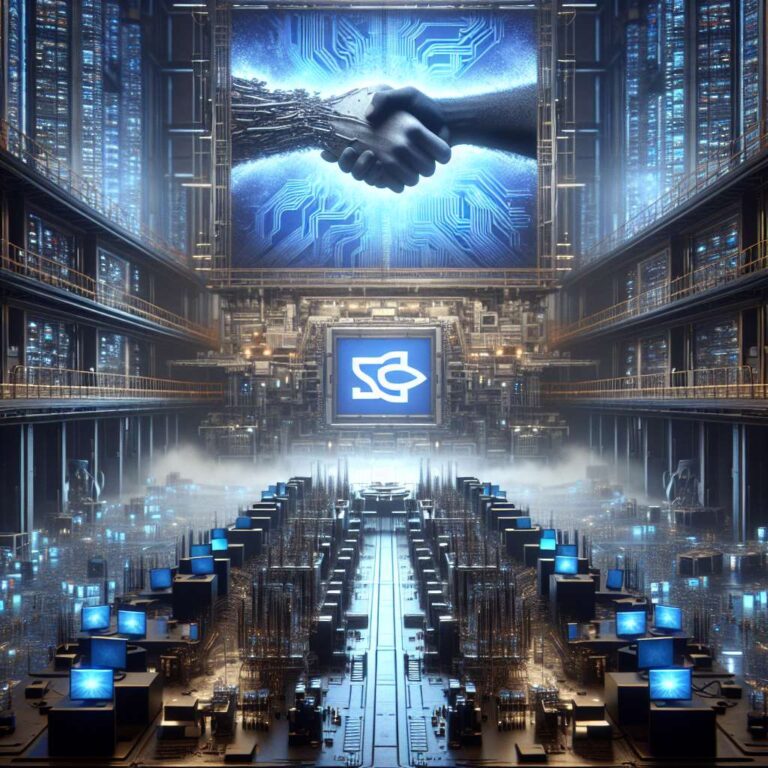
Nvidia’s CEO Jensen Huang revealed a significant reset in the company’s long-standing relationship with Intel, describing a move from decades of head-to-head competition to an active partnership. In a candid interview, Huang joked that Intel had spent 33 years trying to kill Nvidia, underscoring how deeply rooted the rivalry has been. He now characterizes the relationship as collaborative, saying, “we are lovers, not fighters,” a signal of how both chipmakers see more value in working together than competing at all costs.
According to the remarks, the partnership is designed to harness each company’s strengths in semiconductor technology to accelerate innovation. The collaboration is framed around shared goals in advancing Artificial Intelligence and high-performance computing, areas that demand rapidly increasing compute capabilities and complex chip designs. By coordinating efforts instead of duplicating them, Nvidia and Intel aim to drive mutual growth and reinforce their positions in a market that is increasingly shaped by the need for specialized, scalable processing power.
The shift also mirrors broader patterns across the technology sector, where alliances have become a pragmatic response to surging demand for advanced computing and the rising costs of leading-edge development. As Huang described, the focus is no longer on zero-sum competition but on finding common ground to deliver on ambitious roadmaps. This approach is intended to streamline progress in chip technology, helping both companies address customer needs more effectively while navigating supply, complexity, and time-to-market pressures.
More broadly, the Nvidia-Intel tie-up highlights how traditional rivals are reassessing what it takes to succeed in a fast-changing semiconductor landscape. The companies expect the partnership to support advancements that will benefit Artificial Intelligence workloads and other compute-intensive applications, ultimately contributing to a stronger ecosystem. While specific terms were not detailed in the article, the message is clear: collaboration has become a strategic tool for meeting evolving market challenges and unlocking the next wave of performance gains.