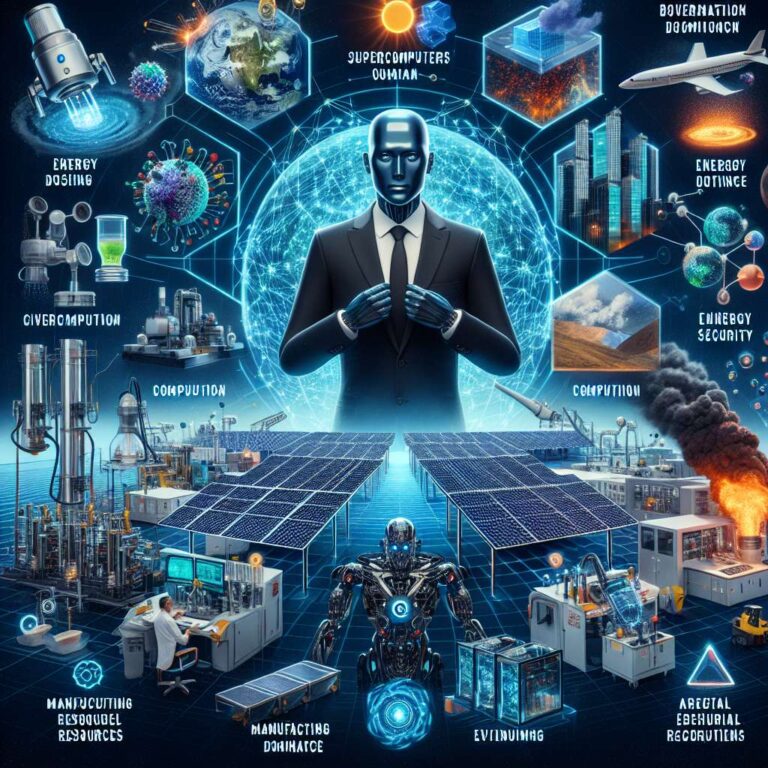
Nvidia will join the US Department of Energy Genesis Mission as a private industry partner to keep United States artificial intelligence both the leader and the standard in technology around the world. The Genesis Mission is part of an executive order recently signed by President Trump and is designed to redefine American leadership in artificial intelligence across three key areas: energy, scientific research and national security. Nvidia will contribute by integrating a discovery platform that connects government, industry and academia, with Department of Energy officials expecting the initiative to double the productivity and impact of American science and engineering while enabling breakthroughs in energy dominance, scientific discovery and national security.
The collaboration builds on existing work between Nvidia and the Department of Energy in several core research domains. Current joint efforts include open artificial intelligence science models, such as the Nvidia Apollo family used to advance weather forecasting, computational fluid dynamics and structural mechanics, as well as artificial intelligence for optimizing manufacturing and supply chains. The partners are also focused on robotics, edge artificial intelligence and autonomous labs using high-fidelity simulation and artificial intelligence-enabled digital twins, alongside research in nuclear energy fission and fusion, quantum computing using supercomputers and artificial intelligence to discover new algorithms, and biology, materials science, synthetic design for healthcare and critical materials. These projects are intended to show how accelerated computing and modern artificial intelligence can support a wide range of scientific and industrial challenges.
Nvidia and the Department of Energy also announced a memorandum of understanding that outlines priorities for accelerating scientific discovery across the department’s mission space. The memorandum covers artificial intelligence for manufacturing and supply chain, open source artificial intelligence, fission and fusion energy, robotics, artificial intelligence-enabled digital twins, quantum computing and science, with an emphasis on artificial intelligence-enabled design, operation and control of complex systems such as reactors, experimental facilities, infrastructure digital twins and autonomous laboratories at the edge for real-time decision-making. Future opportunities may include quantum computing, materials science, biology and synthetic design, subsurface and geothermal resources, environmental cleanup, and open science optimized artificial intelligence models and artificial intelligence “co-scientists” to speed algorithm and code development. The Genesis Mission extends a series of supercomputing collaborations announced at Nvidia’s GTC Washington, D.C., conference, including work with Oracle to build the Department of Energy’s largest supercomputer for scientific research at Argonne National Laboratory and support for seven new systems across Argonne and Los Alamos National Laboratories, underlining how artificial intelligence is driving a new industrial revolution that the Genesis Mission aims to expand and accelerate.