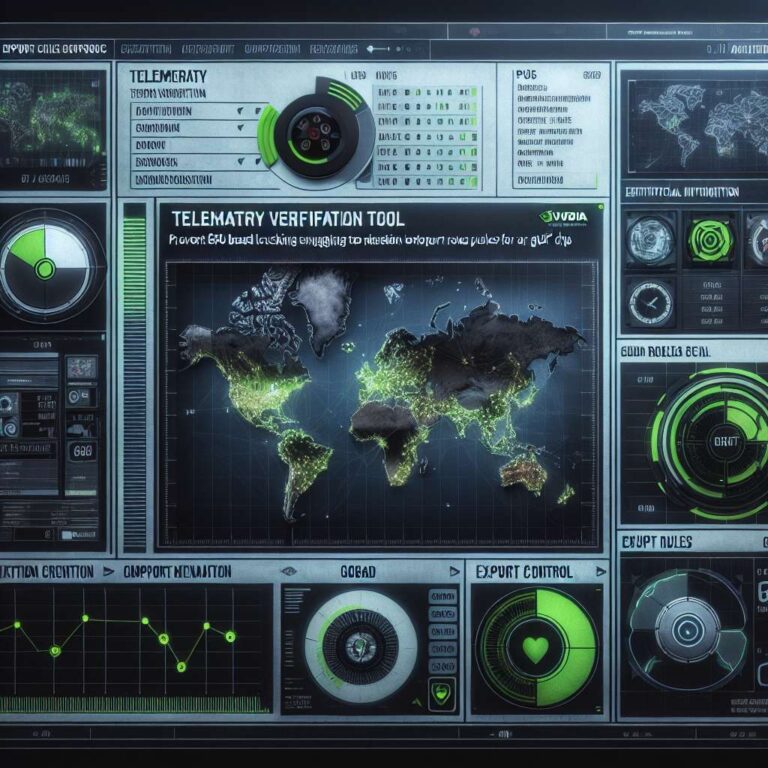
Reuters reports that NVIDIA has developed a software tool intended to verify the locations where its graphics processing units are deployed, a measure the company says could help combat GPU smuggling and enforce U.S. export restrictions. The tool is described as a customer-installed software agent that uses GPU telemetry to monitor fleet health, integrity and inventory. NVIDIA positioned the service as a way for data center operators to track the health and inventory of their entire Artificial Intelligence GPU fleet.
The report frames the development against recent export-control tensions. NVIDIA’s latest ‘Blackwell’ GPUs are banned from sale to certain Chinese entities under U.S. policy, and Reuters says some networks have been able to acquire and export restricted chips via third countries. The story notes that NVIDIA recently received authorization from the Trump administration to sell its H200 ‘Hopper’ GPUs to Chinese customers, a clearance that explicitly excludes the more powerful ‘Blackwell’ generation.
The company told Reuters it is implementing the service to empower data center operators with telemetry-based monitoring. NVIDIA described the offering as a software service that monitors fleet health and inventory and as a customer-installed agent that leverages GPU telemetry to ensure integrity. Reuters frames the capability as a potential tool for tracing device deployments and constraining illicit redistribution of restricted hardware, while also noting the broader regulatory context around GPU exports and enforcement challenges.