Antibody therapies for cancer and other diseases are usually given intravenously at low concentrations, forcing patients to undergo hospital infusions that can last for hours. Delivering the same drugs through a standard syringe has been challenging because reducing the injection volume to a few milliliters requires dramatically increasing antibody concentration, which makes the solution so viscous that it cannot be pushed through a needle. The core problem is how to pack large amounts of antibodies into a small volume while keeping the formulation fluid enough to inject.
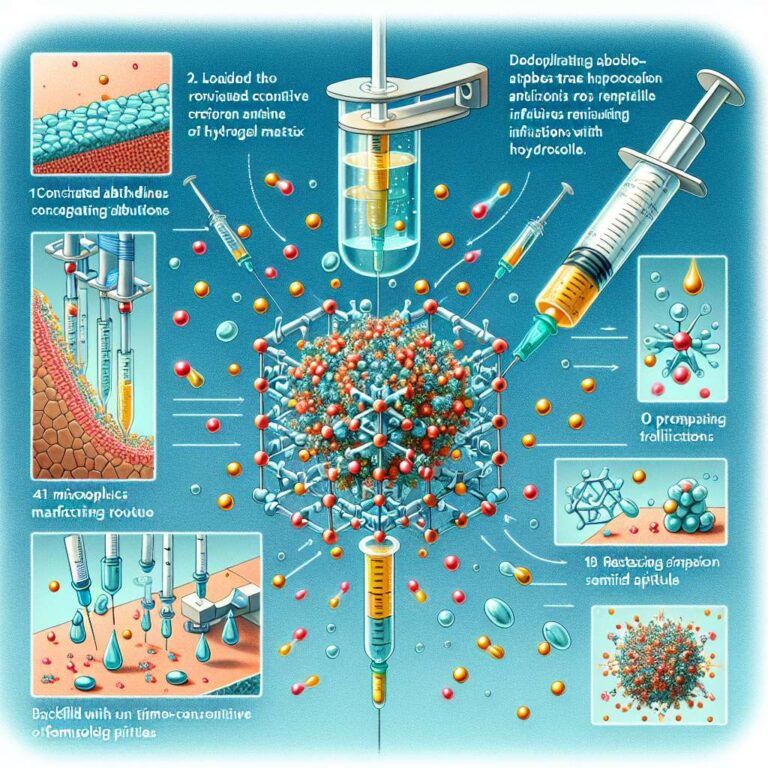
In 2023, Patrick Doyle’s lab created highly concentrated antibody formulations by encapsulating the molecules into hydrogel particles, but that earlier approach relied on centrifugation, a step that is difficult to scale for industrial manufacturing. The new work replaces centrifugation with a microfluidic process that offers more precise and scalable control. Antibodies dissolved in a watery prepolymer solution are formed into droplets suspended in an organic solvent, and these droplets are then dehydrated so that highly concentrated solid antibodies remain trapped within a hydrogel matrix. After dehydration, the solvent is removed and replaced with an aqueous solution, yielding a suspension of semi-solid hydrogel particles loaded with antibody that can still flow through a syringe.
Using semi-solid particles 100 microns in diameter, the team showed that the force needed to push the plunger of a syringe containing the solution was less than 20 newtons. According to lead author and graduate student Talia Zheng, that is less than half of the maximum acceptable force that formulators typically target for comfortable injection. The researchers also reported that more than 700 milligrams of the antibody could be administered at once with a two-milliliter syringe, which they state is enough for most therapeutic applications. The formulations remained stable under refrigeration for at least four months, suggesting practical shelf life for clinical use. Next steps include testing the antibody-loaded particles in animals and refining methods to scale up the microfluidic manufacturing process.